Dan Cooks
The Korean Bowl That Rewards Every Minute of Patience
Bibimbap is one of those dishes that looks complicated until you realize it's just a series of simple things done right — each vegetable cooked on its own terms, a runny egg on top, and gochujang pulling it all together.
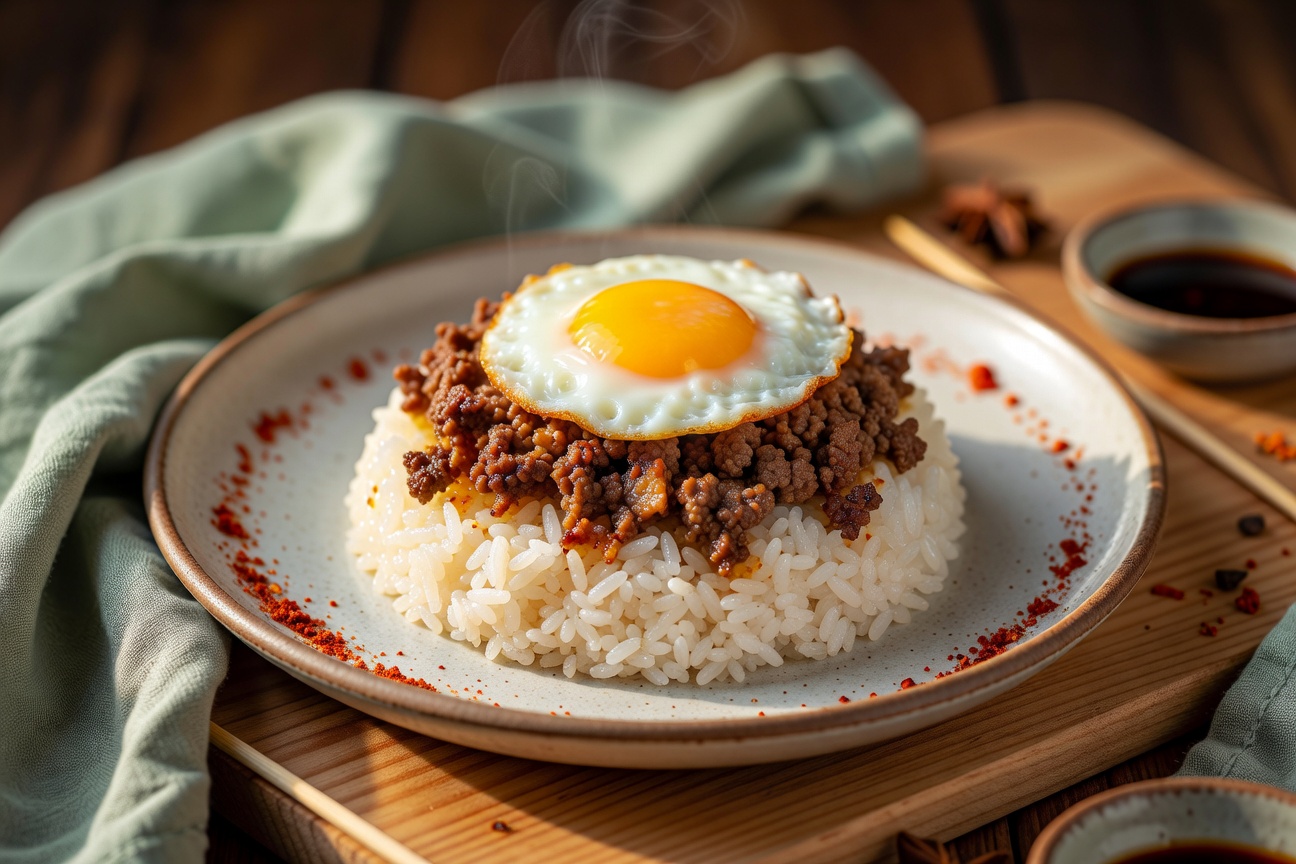
I'll be honest with you — the first time I heard the word bibimbap, I figured it was restaurant food. Something that needed a wok station and a culinary school diploma. But the more I looked at it, the more it reminded me of something my grandmother Hellon would do on a Sunday: cook everything separately, season each piece with care, and let the table do the rest. That's exactly what bibimbap is. A bowl of individually tended ingredients — seasoned ground beef, sautéed shiitakes, blanched spinach, quick-cooked zucchini and carrot — all laid over warm short-grain rice with a soft-fried egg sitting right on top and a spoonful of gochujang to wake the whole thing up. You mix it at the table. The yolk breaks, the chili paste swirls in, and suddenly you've got a sauce nobody planned but everybody wanted. This one's for the family table. It takes about 50 minutes, most of it hands-on and deliberate — and every minute is worth it.
The Story Behind the Bowl
Bibimbap — the name literally means 'mixed rice' — is one of Korea's most beloved everyday dishes, and it's been around in some form for centuries. The idea is elegantly practical: cook your vegetables, your protein, your rice, and your egg each on their own terms, then bring them together in one bowl at the moment of eating. Every region, every household, has its own version. Some use raw beef, some use tofu, some load up on different namul — that's the word for the individually seasoned vegetable sides. What stays constant is the philosophy: respect each ingredient enough to cook it right, and the bowl takes care of itself. That's a cooking value I can get behind. It's the same reason I take my time with a brisket rub or let a steak rest before I cut it. Rushing shortcuts the flavor. Here, patience is the technique.