Dan Cooks
The Teriyaki Glaze That Actually Sticks — Chicken, Asparagus & Scallion Rice
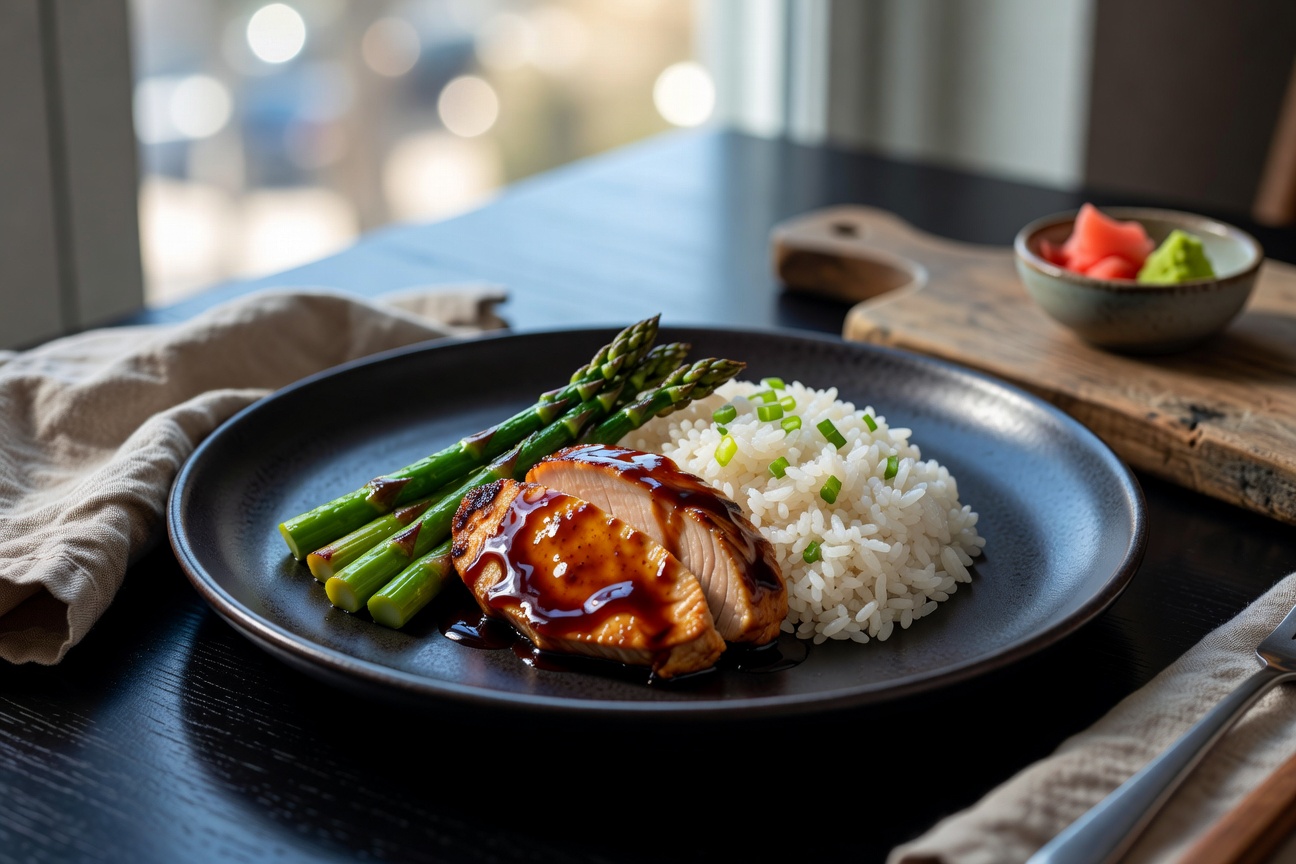
A weeknight Japanese-inspired dinner that's done in 45 minutes — glazed chicken breast, tender asparagus, and buttery scallion rice. The secret is treating teriyaki like the glaze it is, not the sauce most people make…
I'll be honest with you — I didn't grow up eating teriyaki. My grandmother Hellon's kitchen smelled like hickory and cast iron, not soy sauce and mirin. But somewhere between the backyard grill and a cold Florida evening, I started chasing that same feeling in a skillet: that deep, lacquered glaze that coats the back of a spoon and makes the whole house smell like something worth sitting down for. This chicken teriyaki does exactly that. It's a 45-minute weeknight dinner that feels like you put in twice the effort — and the scallion rice underneath soaks up every drop of that glaze like it was born to do it. My family clears the bowls every single time.
Teriyaki Is a Glaze, Not a Sauce — Here's the Difference
Most people pour teriyaki over the chicken at the end and call it done. That's not teriyaki — that's just wet chicken. The real move is reducing your mirin and sake together first, over medium heat, until the mixture turns slightly syrupy and the sharp alcohol smell softens into something sweet and fragrant. Then you add the soy sauce. Then — and only then — does the chicken go back in the pan. What you're building is a glaze: something that clings, coats, and caramelizes against the hot surface of the meat. Rush this step and you get a pale, salty puddle. Take your time and you get lacquer. The cast-iron skillet is your best friend here — it holds heat evenly and gives the glaze something to grip.
Salt Early or Salt Late — Just Not in Between
There's a window after you salt chicken breast — roughly five to thirty minutes — where the surface is wet and the meat will steam in the pan rather than sear. You'll get a pale, soft exterior instead of that golden crust that holds the glaze. The fix is simple: either season the chicken right as it hits the hot butter, or salt it at least 40 minutes ahead and let it dry-brine in the fridge uncovered. That extra time lets the salt work its way into the meat, seasoning it from the inside out, and the surface dries back down so you get real color when it hits the pan. I usually season mine when I start the rice — by the time the rice is simmering, the chicken is ready to go.