Dan Cooks
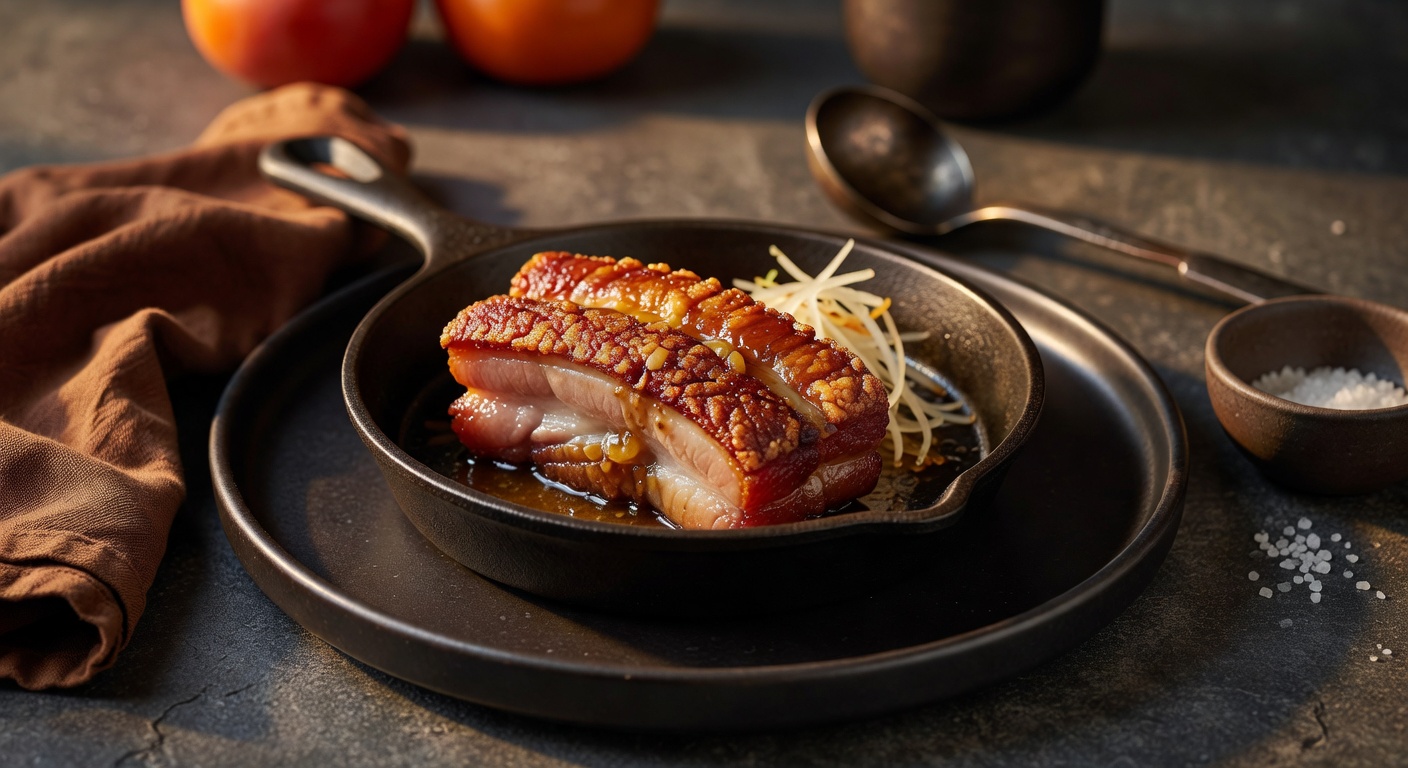
Pork Belly Done Right: Crackling Skin, Bright Ginger-Scallion Sauce
Restaurant-worthy pork belly starts with patience on the skin side and a bold sauce that cuts right through the richness — here's how to nail both in under an hour.
I grew up watching my grandmother and mother coax big flavor out of simple cuts — pork that had been seasoned with patience, cooked slow and steady, and finished with something bright to wake it all up. This pork belly recipe carries that same spirit, even if the sauce leans Japanese instead of Southern. When I first put this together for my family on a warm Tampa evening, my kids went quiet at the table — and around here, that's the highest compliment a plate of food can earn.
Pork belly is one of those cuts that rewards you for slowing down. You can't rush the skin. You can't skip the dry time. But once that cast iron starts singing and the fat begins to render, you'll know you're on the right track. The ginger-scallion sauce comes together in minutes and does the heavy lifting that the fat alone can't — it's bright and savory where the belly is rich and deep. Together, they make a plate that feels like a real occasion, even on a Tuesday night.
The Skin Is Everything
Here's the truth about pork belly: the whole dish lives or dies on what happens in the first 12 minutes. Dry skin is crispy skin. Wet skin is rubbery skin. That's the whole equation.
Pat the belly completely dry with paper towels — more than you think you need to. Then salt it and leave it alone. If you have an hour, let it sit uncovered in the fridge after salting; overnight is even better. Salt draws moisture to the surface, then pulls it back in as seasoned liquid — but there's a window right around 5 to 30 minutes where the moisture is sitting on top and hasn't reabsorbed yet. Cook in that window and you'll trap steam under the skin. Salt early or salt right before the pan goes on, and you're golden.
When the belly goes into the cast iron, lay it skin-side down and press it flat. Don't move it. The fat needs time to render out from under that skin before it can crisp up. Rushing this step with a screaming hot pan traps moisture instead of driving it out. Medium heat, patience, and a little faith — that's your technique.