Dan Cooks

March 28, 2026

Tasteze Blog

Cast Iron Ribeye That Tastes Like a Steakhouse — Made Right at Home

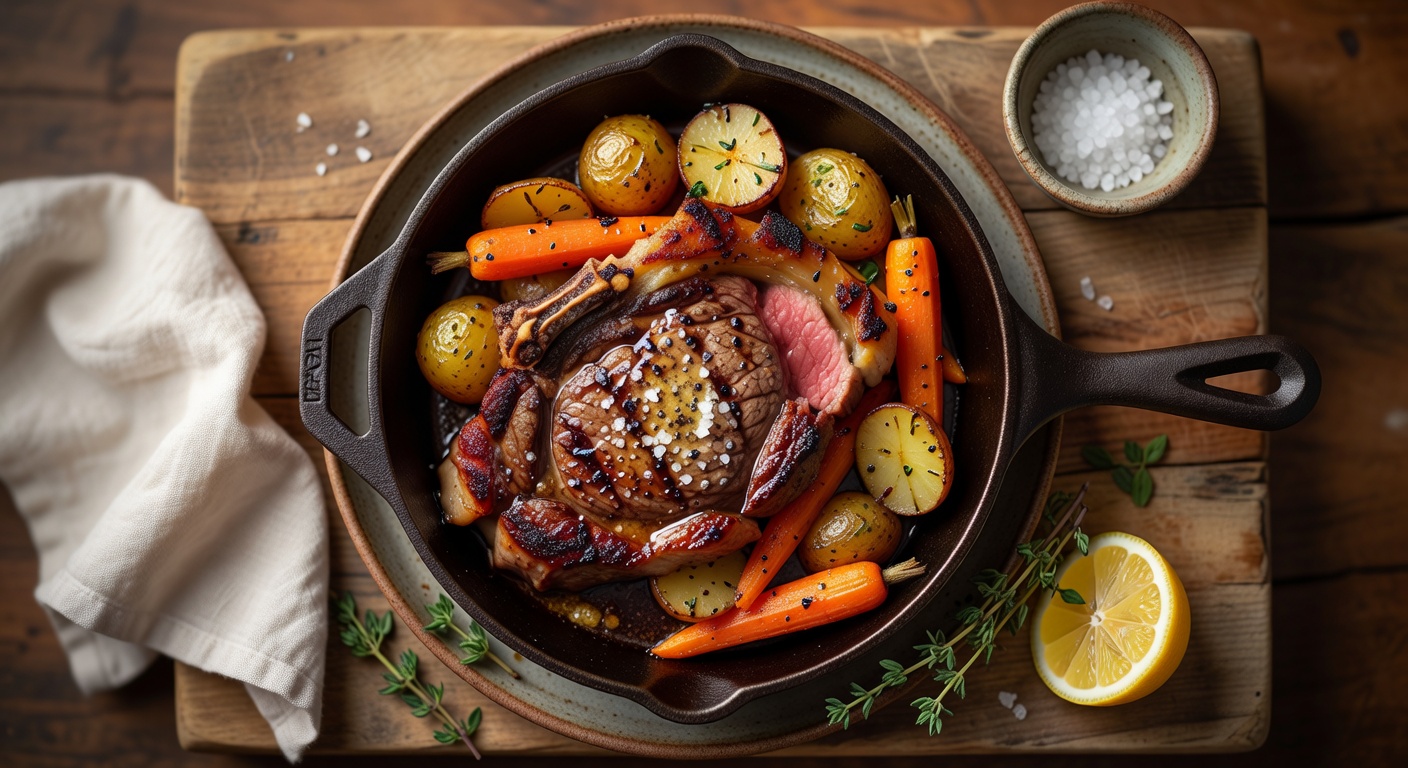
Butter-basted ribeye with golden herb-roasted potatoes and honey-glazed carrots. This is the dinner that makes the whole family go quiet at the table — in the best possible way.

The best meals aren't measured by perfection — they're measured by the memories made around the table.

Dan Cooks

Cast Iron Ribeye That Tastes Like a Steakhouse — Made Right at Home

Butter-basted ribeye with golden herb-roasted potatoes and honey-glazed carrots. This is the dinner that makes the whole family go quiet at the table — in the best possible way.

Some nights you want to do something special for the people you love — not a reservation, not takeout, but something you made with your own hands that hits the table still sizzling. This is that dinner. A thick ribeye, seared hard in a cast iron skillet until it builds a deep mahogany crust, then finished in a pool of foaming butter with smashed garlic and fresh herbs. On the side, baby potatoes roasted cut-side down until they're crispy and golden, and carrots glazed with honey until the edges caramelize into something almost candy-sweet. It's the kind of meal my grandmother would've called 'company food' — except we make it on a Tuesday because life's too short to save the good stuff.

The Sear Is Everything

Here's the truth about cast iron ribeye: the pan does most of the work, but only if you let it. Start by patting the steaks completely dry — and I mean bone dry, every bit of surface moisture gone. Moisture is the enemy of crust. Season generously with kosher salt and black pepper, pressing it in, then let the steaks sit out for 30 minutes. A cold steak hitting a hot pan steams instead of sears.

When it's time to cook, get that cast iron screaming hot — two to three minutes over high heat until you see the first wisps of smoke. Add the avocado oil (it handles that heat without burning), then lay the steaks away from you into the pan. Don't touch them. Don't peek. Don't move them around. Let the Maillard reaction do its work and build that deep, mahogany crust. After three minutes, flip once. Two more minutes on the second side.

Now comes the magic: drop the heat to medium, add your butter, smashed garlic, rosemary, and thyme. As the butter melts and foams, tilt the pan and start basting — spooning that fragrant, herb-infused butter over the steaks continuously for 60 to 90 seconds. The butter carries all those herb and garlic flavors straight into the crust. This is the step…

Page 1Continued

Dan Cooks

Blog print edition

Why the Rest Matters as Much as the Sear

Pull the steaks off the heat at 130–135°F for medium-rare, or 140–145°F for medium. Then put them somewhere warm and walk away for at least five minutes. I know it's hard — the smell alone will have everyone hovering — but cutting too early means all those juices run straight onto the cutting board instead of staying in the meat. The rest is not optional. Tent loosely, set a timer, and go check on your vegetables.

The Vegetables Aren't an Afterthought

A ribeye this rich needs sides that can hold their own. The baby potatoes go into a 425°F oven cut-side down — that flat surface against the hot sheet pan is what gives you the crispy, golden bottom you're after. The carrots get tossed with honey before roasting, and that glaze caramelizes at the edges into something deeply sweet and a little sticky. That sweetness is doing real work here: the steak and butter are savory and rich all the way through, and the honey-glazed carrots pull the plate into balance. Don't skip the glaze, and don't pull the vegetables early — you want those caramelized edges. The fresh parsley scattered over at the end adds a bright, grassy note that cuts through all that richness.

Sourcing: Start with the Right Ribeye

For a dish this simple, the quality of the ribeye is everything. Look for USDA Choice or Prime — that intramuscular fat, the marbling running through the meat, is what makes the butter baste sing. A lean ribeye is a contradiction in terms. Aim for steaks about an inch thick; thinner and they overcook before the crust develops, thicker and you'll need to finish them in the oven. For the salt, kosher is the right call here — the larger crystals give you more control and create a better crust than fine table salt.

Page 2Continued

Dan Cooks

Closing page

balanced

This is a protein-forward, satisfying dinner — honest about what it is. Round out the plate with something fresh if you want more balance.

Honest Nutrition Notes

This dinner earns its place on the table — it's genuinely protein-packed, covering well over half your daily needs in a single serving. The fat content is real and intentional; ribeye and butter are rich by design, and that richness is part of what makes this meal satisfying. The carrots and potatoes bring fiber and potassium to the plate, which matters. Where this meal is light: there's no fruit and no whole grain here, so if you're building a fuller plate, a simple green salad or some sliced citrus on the side rounds things out nicely. The honey glaze adds a modest amount of sweetness — nothing alarming, just enough to balance the savory weight of the steak.

This is the kind of dinner that doesn't need a special occasion to justify it. A good ribeye, a hot cast iron, some butter and herbs — that's all it takes to put something on the table that feels like a real celebration. My kids hear that sizzle from the other room and come running. My wife sees the butter pooling over the crust and smiles before she even takes a bite. That's what cooking is for. Fire up something good tonight.

Cast Iron Ribeye That Tastes Like a Steakhouse — Made Right at Home Print Edition | Tasteze Blog