Spanish Croquetas: The Béchamel Is Everything
Ham, egg, and chicken wrapped in a silky béchamel, fried golden — this is the Spanish appetizer that turns a backyard gathering into something worth remembering.
 Dan Cooks5 min readPrint this post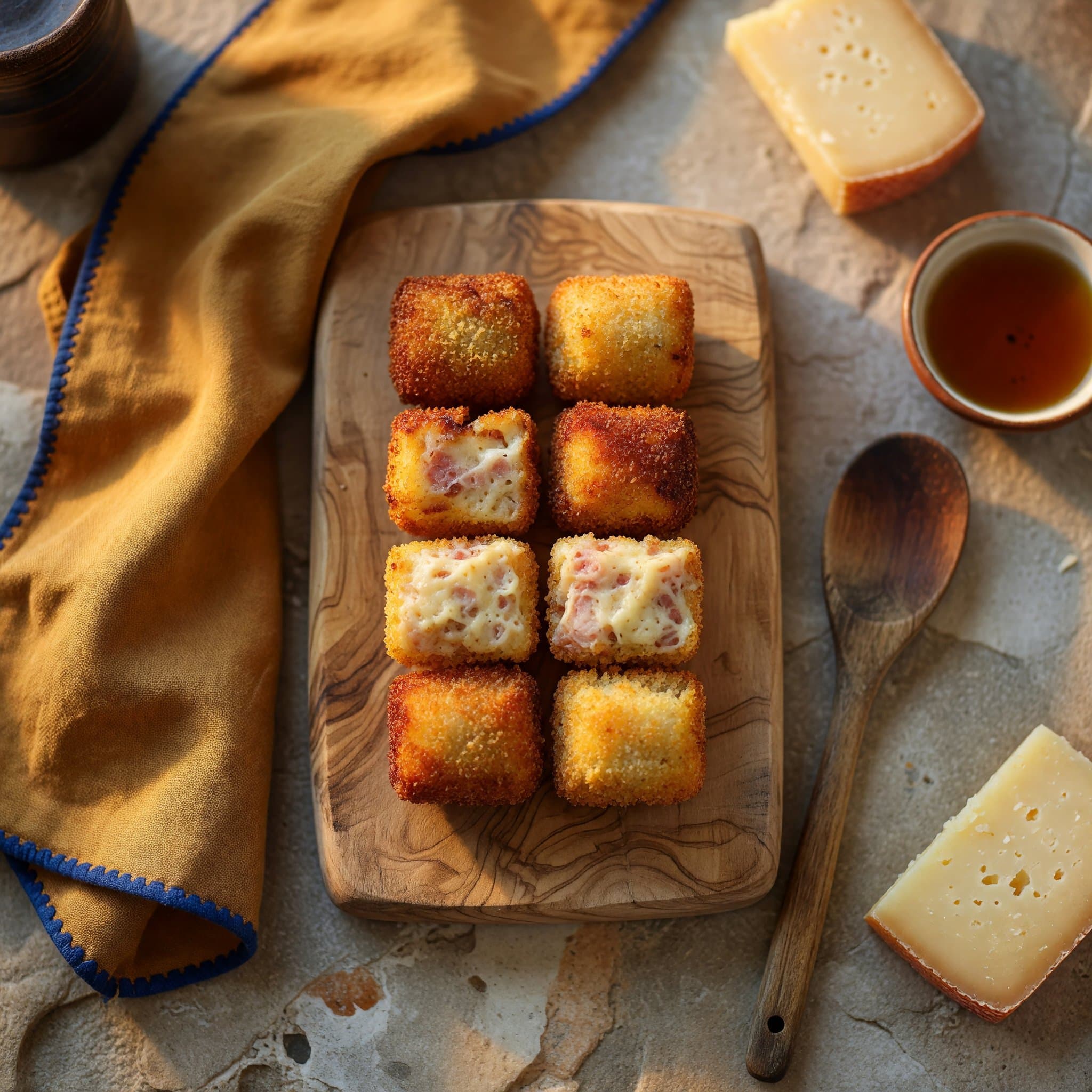
The smoke does its magic. You just have to be patient enough to let it — and a great béchamel is no different.
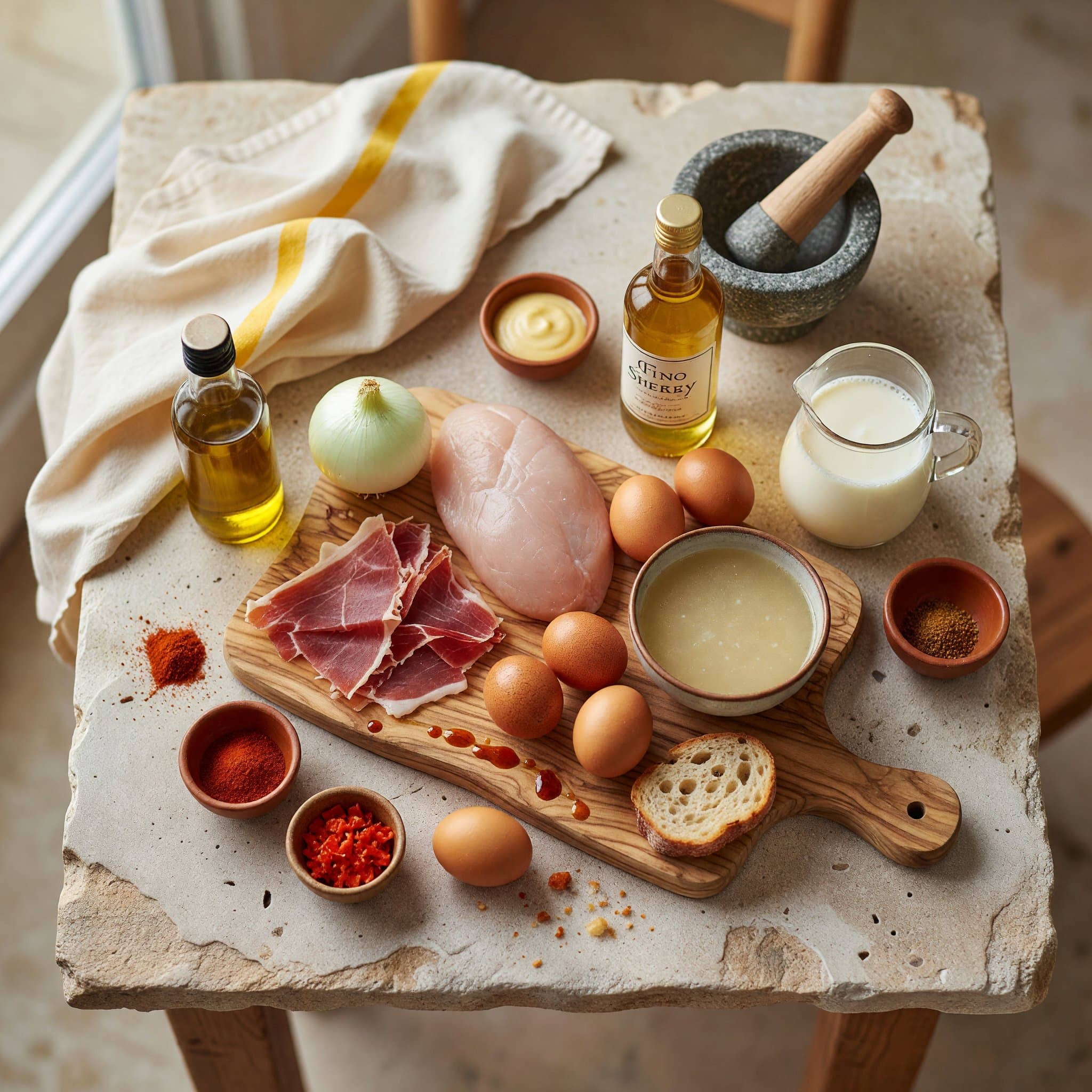
I grew up learning that the best food doesn't come from shortcuts — it comes from patience and love. Down in Tampa, I spend most of my time at the grill, but every now and then a recipe pulls me back inside to the stovetop, and I'm grateful for it. These croquetas are one of those recipes. Spanish at heart, built on a grandmother's béchamel, and packed with Serrano ham, chicken, and grated egg — they're the kind of appetizer that stops conversation the moment the platter hits the table. My family goes quiet, then reaches. That's all the review I need.
The secret isn't fancy technique. It's time. You give the béchamel the time it needs, you chill it properly, and the rest takes care of itself. This is slow, deliberate cooking — the kind I respect most.
A Recipe That Travels Through Families
Croquetas started as a way to honor leftovers — a little chicken here, some ham there, folded into a rich sauce and fried until golden. There's something deeply Southern about that idea, even if it was born in Spain. We don't waste good food. We transform it.
The recipe behind these croquetas has been passed down through generations — grandmother to mother to grandchildren — and that lineage shows in every bite. The béchamel isn't just a sauce; it's the soul of the dish. Get it right and you've got something that tastes like it belongs on a family table that's been set a thousand times before. That's the kind of cooking I believe in.
The Béchamel: Don't Rush It
Here's where most people lose the plot: they get impatient with the béchamel. I understand — you're standing there stirring and nothing seems to be happening. But this sauce needs 30 to 40 minutes of near-constant attention, and every minute earns you something.
Start by sweating your onion in olive oil until it's fully soft — no crunch, no color. Then build your roux: butter and flour together, stirred constantly for a good two to three minutes until it smells nutty and toasty, not raw and chalky. That step matters more than people realize. From there, warm your milk and chicken stock together before adding them to the roux — cold liquid into a hot roux is how you get lumps. Add it gradually, whisk almost continuously, and simmer the finished sauce for a full minute or two after it tightens up. The starch needs that time to fully set. Skip it, and your croquetas will lose their shape in the fryer.
Once the ham, chicken, and grated egg are stirred in, pour the whole thing onto a plate, cover it tight, and put it in the fridge. Overnight is best. Cold béchamel shapes beautifully; warm béchamel is a mess.
Why the Sherry Matters
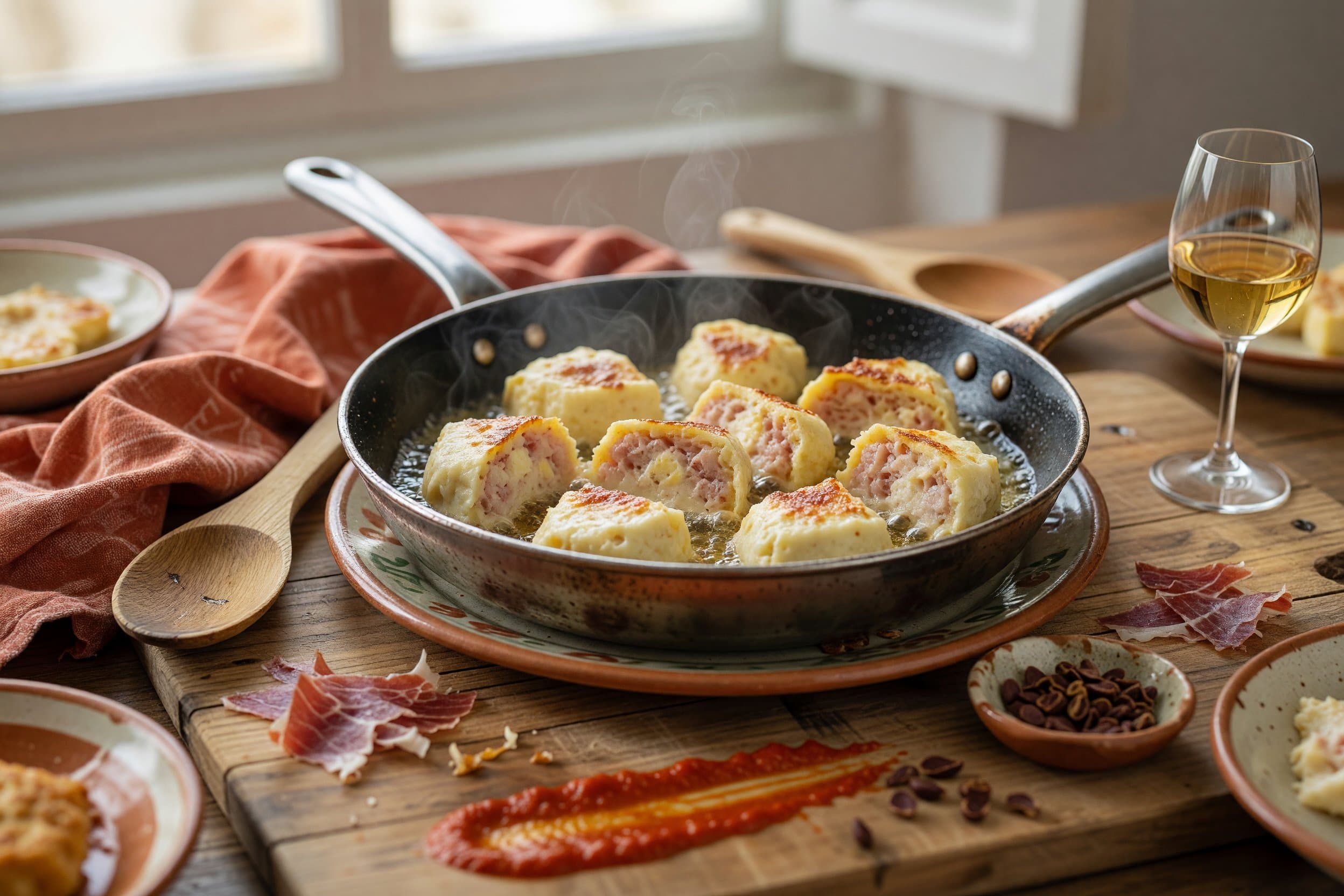
Two tablespoons of fino sherry doesn't sound like much, but it punches well above its weight in this recipe. Dry fino sherry carries a bright, almost briny character that weaves right into the olive oil and softened onion. When it hits the hot pan, those aromatics cook into the chicken and then into the béchamel itself — quietly bridging the richness of the butter and milk to the deep, savory punch of the Serrano ham. You won't taste sherry in the finished croqueta. You'll just taste something that's more complete than it would have been without it.
One note: use a fresh bottle. A stale sherry goes flat in the pan, and flat is the one thing this dish can't afford to be.
Honest Talk on the Nutrition
I'm not going to pretend these are a light bite — butter, whole milk, breadcrumbs, and a deep fryer are involved. The béchamel base is rich, and the saturated fat across a full batch adds up. Two or three croquetas as a proper appetizer is the sweet spot, not a bowl of them as a main. Pair them with a crisp green salad or some fresh tomatoes and you've got a balanced spread that feels like a celebration without going overboard.
What's genuinely good here: chicken breast and eggs give every piece a solid protein foundation, and the ingredient list is refreshingly honest — real food, no shortcuts. The olive oil you're frying with is one of the better choices you can make for that job. Treat these as the special-occasion bite they were always meant to be, and they'll earn their place on the table every time.
Substitutions that still taste like the recipe.
A few smart swaps if you can't find an ingredient or want to tweak the flavor profile — all chosen to keep the spirit of the dish intact.
- brandy
Shares fruity ester compounds with sherry
- bourbon
Shares lactone compounds with sherry
- port wine↑ sweet
Shares phenolic compounds with sherry — more sweet
- clotted cream
Shares lactone compounds with butter
- mascarpone
Shares lactone compounds with butter
- cream
Shares lactone compounds with butter
- half and half
Shares lactone compounds with whole milk
- low-fat milk↓ fatty
Shares lactone compounds with whole milk — less fatty
- whipped cream↑ fatty
Shares lactone compounds with whole milk — more fatty
- naan
Shares pyrazine compounds with bread
- focaccia
Shares pyrazine compounds with bread
- pita
Shares pyrazine compounds with bread
Whether you're feeding a backyard full of family or setting out a platter before a holiday dinner, these croquetas will do the work for you. Make the béchamel the day before, shape them in the morning, fry them just before your people arrive. The smell alone will pull everyone into the kitchen.
Fire up something good today — even if today, the fire is on the stovetop.
The Quarterly
Get the next Quarterly from Dan Cooks
Seasonal recipes, notes, and the issue links worth saving.
Comments