The Korean Bowl That Rewards Every Minute of Patience
Bibimbap is one of those dishes that looks complicated until you realize it's just a series of simple things done right — each vegetable cooked on its own terms, a runny egg on top, and gochujang pulling it all together.
 Dan Cooks7 min readPrint this post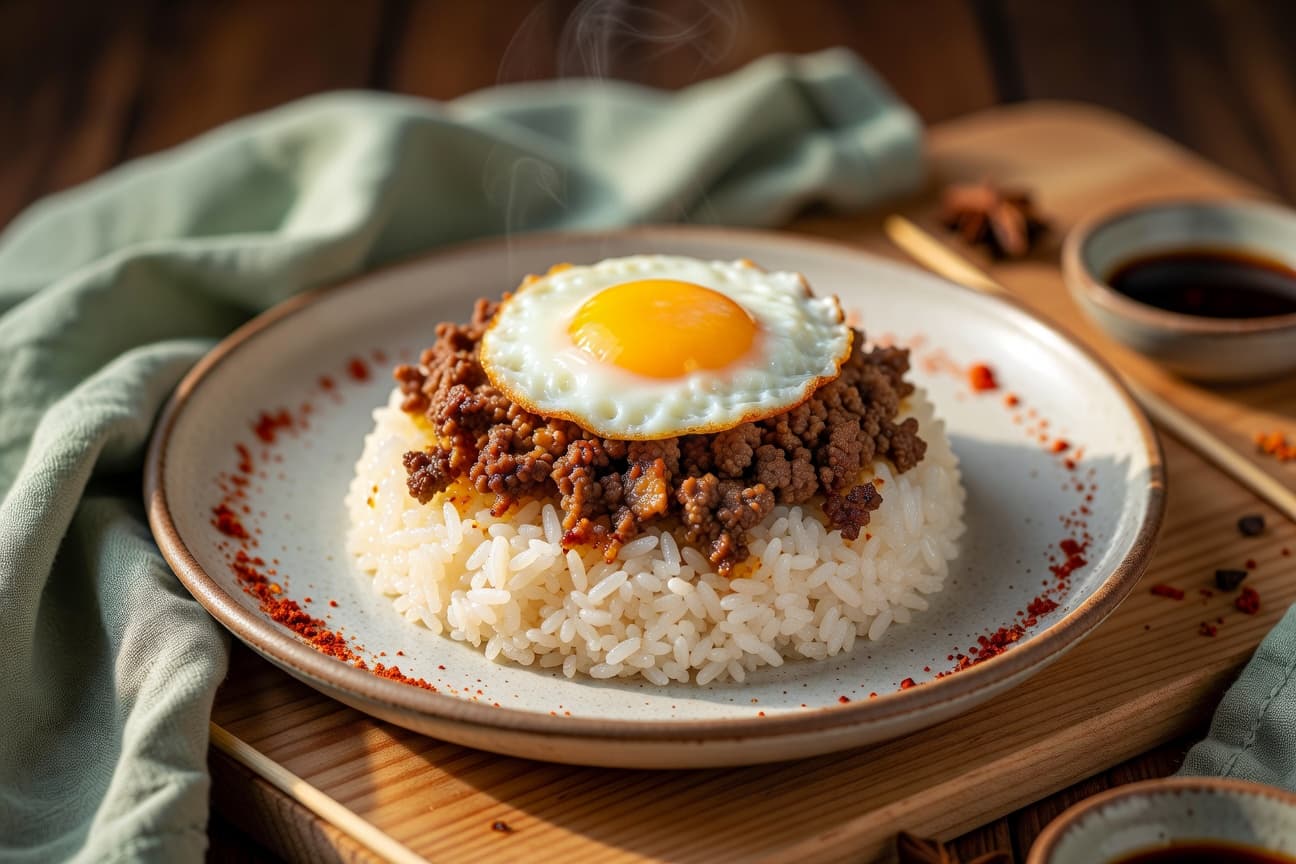
The best meals aren't measured by perfection — they're measured by the memories made around the table.
I'll be honest with you — the first time I heard the word bibimbap, I figured it was restaurant food. Something that needed a wok station and a culinary school diploma. But the more I looked at it, the more it reminded me of something my grandmother Hellon would do on a Sunday: cook everything separately, season each piece with care, and let the table do the rest. That's exactly what bibimbap is. A bowl of individually tended ingredients — seasoned ground beef, sautéed shiitakes, blanched spinach, quick-cooked zucchini and carrot — all laid over warm short-grain rice with a soft-fried egg sitting right on top and a spoonful of gochujang to wake the whole thing up. You mix it at the table. The yolk breaks, the chili paste swirls in, and suddenly you've got a sauce nobody planned but everybody wanted. This one's for the family table. It takes about 50 minutes, most of it hands-on and deliberate — and every minute is worth it.
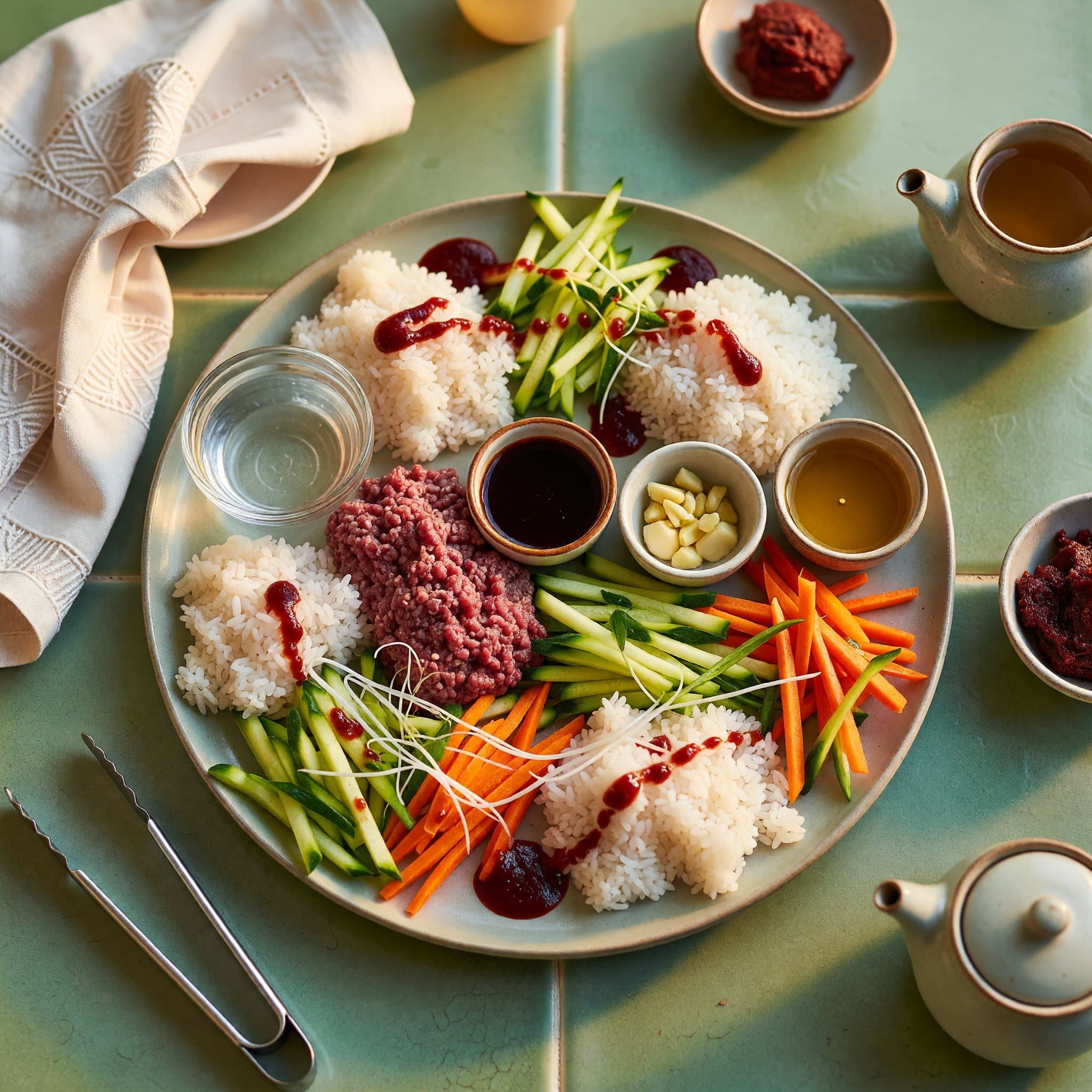
25 minutes, and you’re ready to cook.
Twenty-five minutes of mise en place makes the actual cooking feel smooth. Get everything prepped, portioned, and staged near the stove before you light the first burner.
- Gather EquipmentGather a large pot with lid, a skillet, a small bowl, a cutting board, a chef's knife, a spoon, paper towels, measuring cups and spoons, a grater or julienne peeler, a small whisk, and serving bowls.
- Prepare the GarlicPeel 2 cloves of garlic and mince finely to yield about 1½ teaspoons. Place in a small prep container.1 min
- Prepare the ZucchiniTrim the ½ zucchini and julienne into thin matchsticks using a julienne peeler or mandoline. Pat dry with paper towels to remove excess moisture. Place in a prep container.2 min
- Prepare the CarrotPeel the ½ carrot and julienne into thin matchsticks using a julienne peeler or mandoline. Pat dry with paper towels. Place in a prep container.2 min
- Prepare the Shiitake MushroomsWipe clean 3 oz of shiitake mushrooms with a damp paper towel. Slice into thin strips (about ¼ inch thick). Place in a prep container.2 min
- Prepare the Fresh SpinachRinse 2 cups of fresh spinach under cold water and pat dry. Leave whole for blanching. Place in a prep container.1 min
- Measure Soy Sauce and Sesame Oil MixtureIn a small bowl, combine 0.5 tbsp soy sauce with 0.5 tsp sesame oil. Set aside.30s
- Measure SpicesMeasure out ½ tsp salt and ¼ tsp black pepper into a small container for seasoning the vegetables.30s
- Prepare the Ground BeefRemove ½ lb ground beef from packaging and place in a prep container. Keep cold until ready to cook.30s
- Measure Oils and GochujangMeasure out 3 tbsp vegetable oil into a small container with a spoon for easy portioning during cooking. Measure 1 tbsp gochujang into a small bowl.45s
- Measure Rice and WaterMeasure 1 cup short-grain white rice and 1¼ cup water into separate containers. Keep rice dry until ready to rinse.30s
- Prepare the EggsCrack 2 eggs into a small bowl. Keep cold until ready to fry.30s
- Stage IngredientsArrange all prepped containers near the stove in cooking order: rice and water, minced garlic, ground beef, soy-sesame mixture, mushroom slices, zucchini matchsticks, carrot matchsticks, spinach, eggs, vegetable oil portions, salt and pepper, gochujang, and sesame seeds. Have serving bowls ready.
The Story Behind the Bowl
Bibimbap — the name literally means 'mixed rice' — is one of Korea's most beloved everyday dishes, and it's been around in some form for centuries. The idea is elegantly practical: cook your vegetables, your protein, your rice, and your egg each on their own terms, then bring them together in one bowl at the moment of eating. Every region, every household, has its own version. Some use raw beef, some use tofu, some load up on different namul — that's the word for the individually seasoned vegetable sides. What stays constant is the philosophy: respect each ingredient enough to cook it right, and the bowl takes care of itself. That's a cooking value I can get behind. It's the same reason I take my time with a brisket rub or let a steak rest before I cut it. Rushing shortcuts the flavor. Here, patience is the technique.
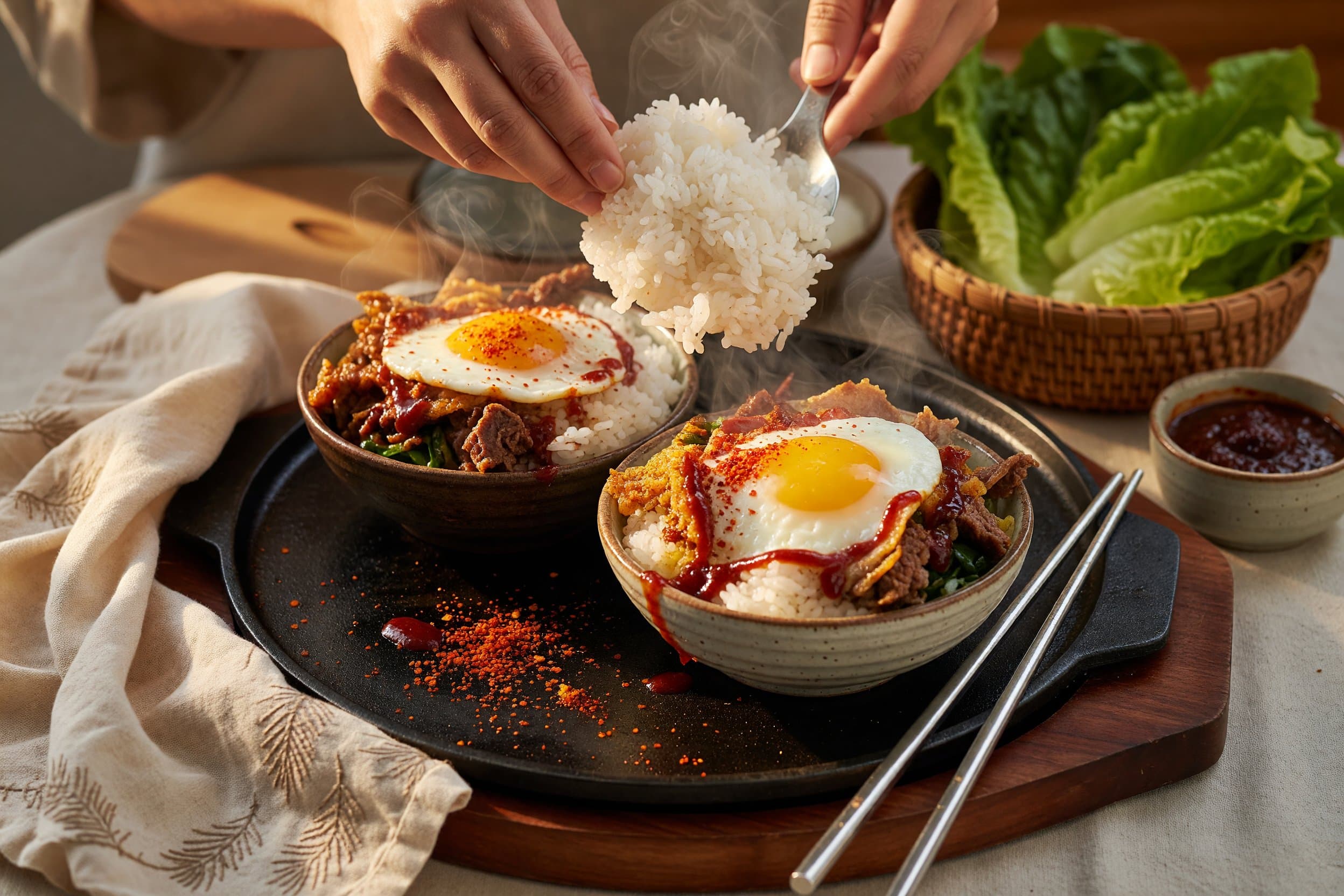
Cook Each Vegetable Alone — No Crowding
This is the part where most people try to save time and end up losing flavor. Zucchini, carrot, and spinach each need their own turn in the pan. When you pile them in together, the temperature drops fast and the moisture they release turns into steam — you end up with soft, gray vegetables instead of lightly seared ones with a little color and bite. Cook each one in a hot pan with just enough oil, season it right there in the pan, and move it to its own plate. Two minutes per vegetable is all it takes. The spinach gets a quick blanch in boiling salted water instead — one minute, then squeeze it dry and toss with a pinch of salt and a drop of sesame oil. That finishing touch is what makes it taste like it belongs in the bowl. For the shiitakes: pat them thoroughly dry before they go anywhere near heat. A wet mushroom won't brown — it'll just steam in its own moisture and turn rubbery. Start them in a hot dry pan, let them release their liquid and cook it off, then add oil and let them go golden.
How to Finish the Bowl
The gochujang is the final piece, and it deserves a little attention. Stir a tablespoon of it with just a touch of water to loosen it into a drizzleable paste — straight from the jar it's too thick to spread evenly. A small dollop on top of each bowl is all you need. Its fermented depth echoes the soy sauce already in the beef and mushrooms, and its heat cuts right through the richness of the egg yolk and the beef fat. The sesame oil and sesame seeds go on last. Use toasted sesame oil — the flavor difference is significant. A few drops at the end, after the heat is off, is all it takes. Heat kills those roasted, nutty aromatics fast, so add it late and let it do its job as a finisher. Then scatter the sesame seeds, set the bowls on the table, and let everyone mix their own.
Substitutions that still taste like the recipe.
Need to work with what's in the fridge? Here are the swaps that hold up best in this bowl without losing what makes it work.
- ground pork
Shares maillard compounds with ground beef
- ribeye steak
Shares maillard compounds with ground beef
- lamb
Shares pyrazine compounds with ground beef
- doubanjiang↓ sweet
Shares pyrazine compounds with gochujang — less sweet
- harissa↓ savory
Shares terpene compounds with gochujang — less savory
- red curry paste↓ sweet
Shares terpene compounds with gochujang — less sweet
- maitake
Shares pyrazine compounds with shiitake mushroom
- mushroom
Shares pyrazine compounds with shiitake mushroom
- porcini
Shares pyrazine compounds with shiitake mushroom
- bok choy
Shares aldehyde compounds with spinach
- cabbage
Shares aldehyde compounds with spinach
- endive
Shares aldehyde compounds with spinach
- tapioca starch
Shares maillard compounds with white rice
- cornstarch
Shares maillard compounds with white rice
- flour
Shares maillard compounds with white rice
Common questions
Can I make any of the components ahead of time?
How spicy is the gochujang? Can I adjust it for kids?
Do I really need to cook each vegetable separately?
What if I don't have a julienne peeler for the zucchini and carrot?
Can I make this vegetarian?
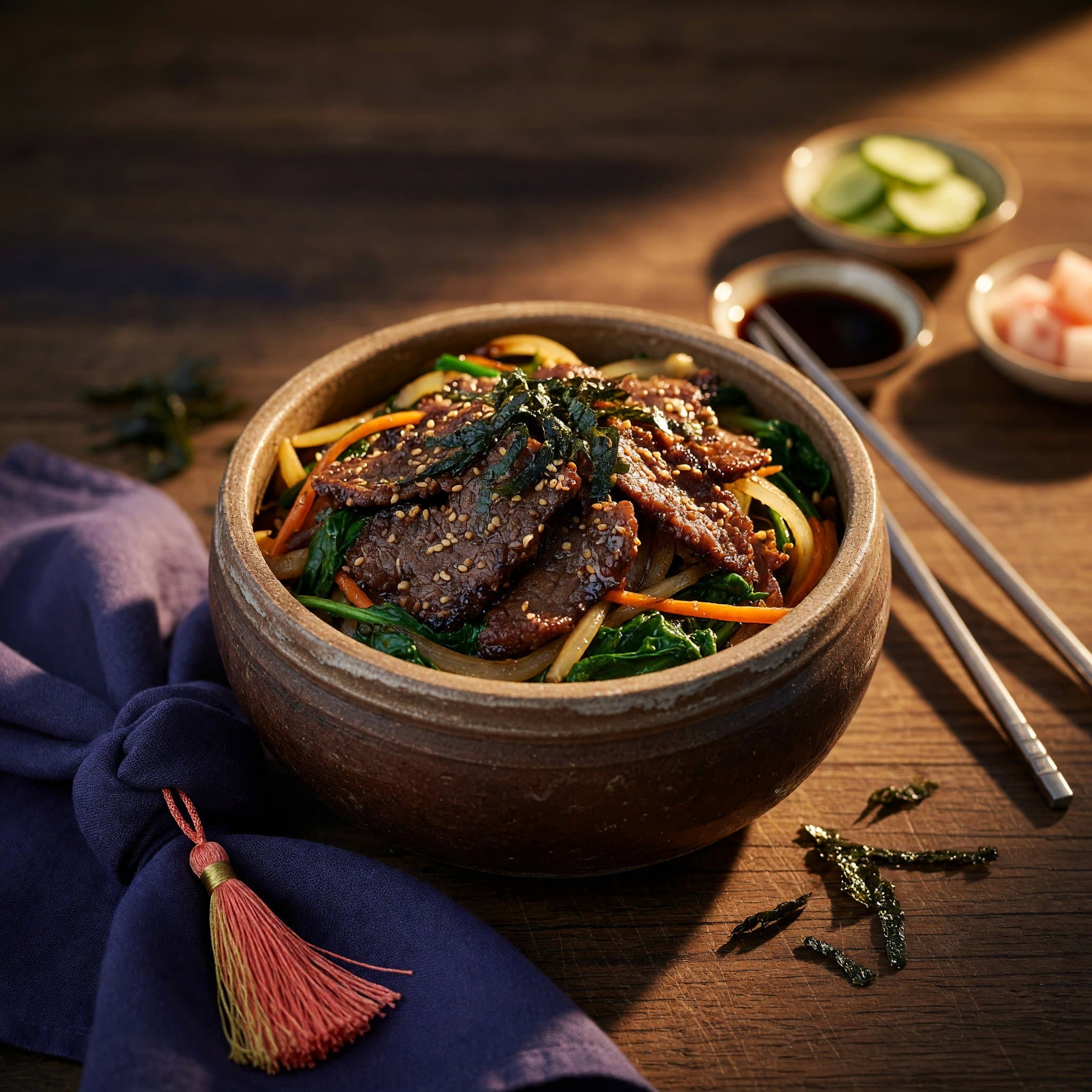
This bowl is the kind of meal that earns its time. Fifty minutes, a little patience, and a hot skillet — and you put something on the table that feels like it came from somewhere with real cooking tradition behind it. My family's always been my reason to light the coals, and this recipe reminded me that the same love that goes into a slow-smoked rack of ribs can go into a bowl of rice and vegetables, too. Good food is good food, whatever the fire looks like. Fire up something good today — and if the kids want to mix their own bowls, let them. That's half the fun.
The Quarterly
Get the next Quarterly from Dan Cooks
Seasonal recipes, notes, and the issue links worth saving.
Comments