The Teriyaki Glaze That Actually Sticks — Chicken, Asparagus & Scallion Rice
A weeknight Japanese-inspired dinner that's done in 45 minutes — glazed chicken breast, tender asparagus, and buttery scallion rice. The secret is treating teriyaki like the glaze it is, not the sauce most people make…
 Dan Cooks7 min readPrint this post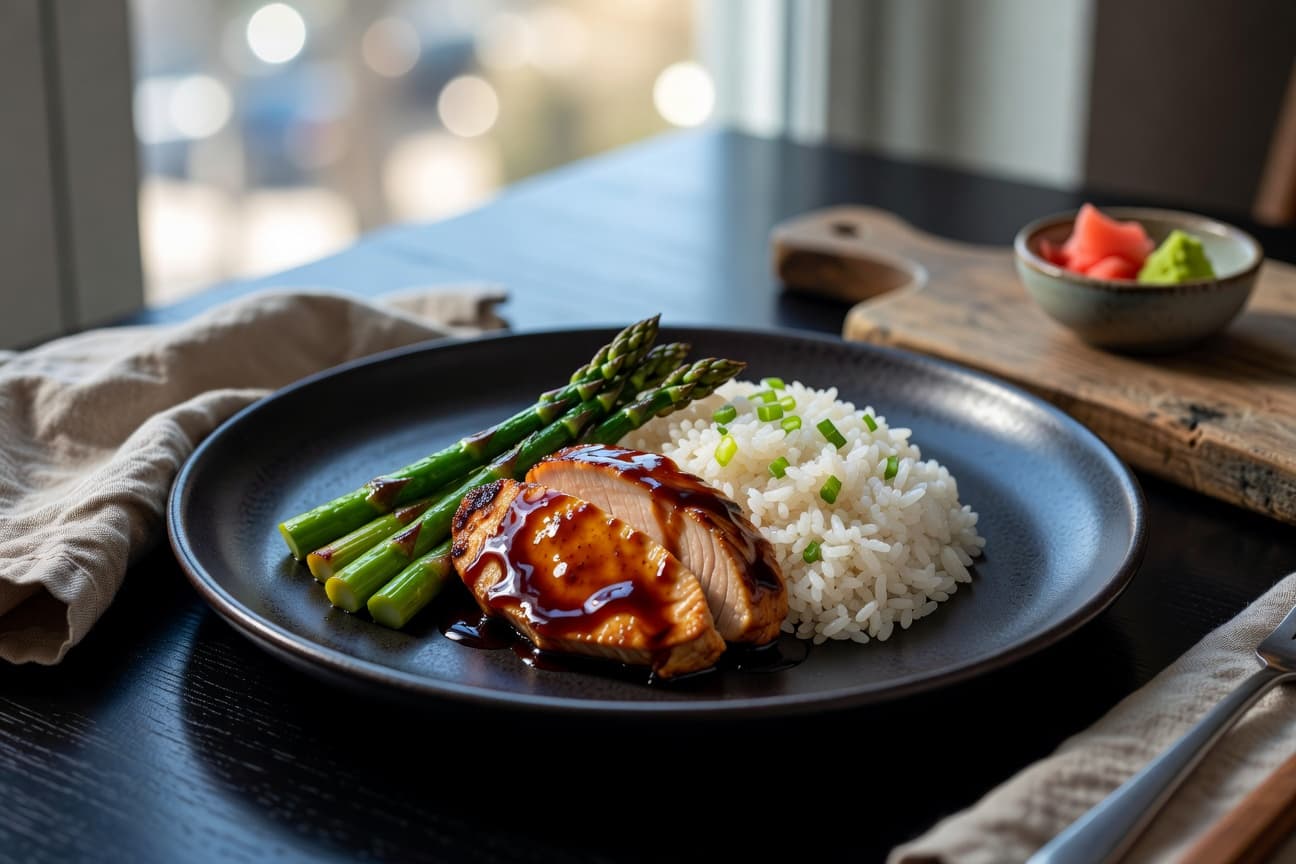
The best meals aren't measured by perfection — they're measured by the memories made around the table.
I'll be honest with you — I didn't grow up eating teriyaki. My grandmother Hellon's kitchen smelled like hickory and cast iron, not soy sauce and mirin. But somewhere between the backyard grill and a cold Florida evening, I started chasing that same feeling in a skillet: that deep, lacquered glaze that coats the back of a spoon and makes the whole house smell like something worth sitting down for. This chicken teriyaki does exactly that. It's a 45-minute weeknight dinner that feels like you put in twice the effort — and the scallion rice underneath soaks up every drop of that glaze like it was born to do it. My family clears the bowls every single time.
Teriyaki Is a Glaze, Not a Sauce — Here's the Difference
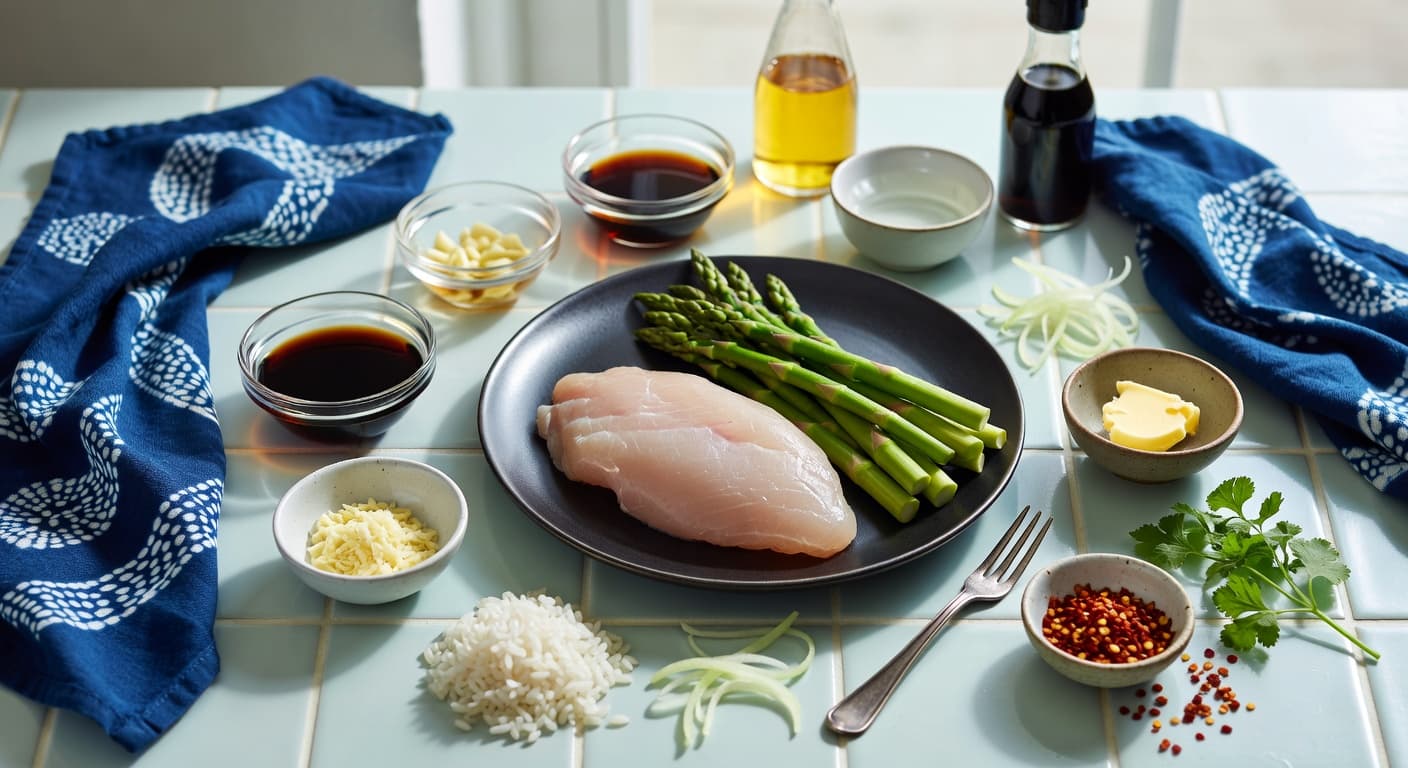
Most people pour teriyaki over the chicken at the end and call it done. That's not teriyaki — that's just wet chicken. The real move is reducing your mirin and sake together first, over medium heat, until the mixture turns slightly syrupy and the sharp alcohol smell softens into something sweet and fragrant. Then you add the soy sauce. Then — and only then — does the chicken go back in the pan. What you're building is a glaze: something that clings, coats, and caramelizes against the hot surface of the meat. Rush this step and you get a pale, salty puddle. Take your time and you get lacquer. The cast-iron skillet is your best friend here — it holds heat evenly and gives the glaze something to grip.
Salt Early or Salt Late — Just Not in Between
There's a window after you salt chicken breast — roughly five to thirty minutes — where the surface is wet and the meat will steam in the pan rather than sear. You'll get a pale, soft exterior instead of that golden crust that holds the glaze. The fix is simple: either season the chicken right as it hits the hot butter, or salt it at least 40 minutes ahead and let it dry-brine in the fridge uncovered. That extra time lets the salt work its way into the meat, seasoning it from the inside out, and the surface dries back down so you get real color when it hits the pan. I usually season mine when I start the rice — by the time the rice is simmering, the chicken is ready to go.
25 minutes, and you’re ready to cook.
Get your mise en place sorted before you light the burner. With everything staged and ready, this dinner moves fast and nothing gets left behind.
- Gather EquipmentGather a saucepan with lid, cast-iron skillet, small mixing bowl, cutting board, chef's knife, paper towels, measuring spoons, measuring cups, whisk, fork, and serving bowls.
- Prepare the Chicken BreastPat the chicken breasts dry with paper towels. Season both sides generously with salt and black pepper. Set on a clean plate.
- Prepare the GarlicPeel and mince the garlic cloves finely — you'll need about 1 teaspoon minced. Place in a small prep bowl.
- Prepare the GingerPeel fresh ginger and mince finely — you'll need about 1½ teaspoons minced. Place in the same bowl as the garlic.
- Whisk the Teriyaki SauceIn a small bowl, whisk together the soy sauce, mirin, sake, minced garlic, and minced ginger until well combined. Set aside.
- Prepare the AsparagusRinse the asparagus and trim the woody bottom 1–2 inches from each spear. Cut into 2-inch pieces. Place in a prep container.
- Prepare the OnionPeel the onion half and slice thinly into half-moons. Place in a prep container.
- Prepare the ScallionRinse the scallions and trim the root ends. Slice the white and light green parts separately from the dark green tops. Keep the white parts and dark green parts in separate prep containers.
- Prepare the RiceRinse the short-grain white rice under cold water in a fine-mesh strainer, stirring gently, until the water runs clear. Measure out 1¼ cups water in a measuring cup.
- Measure Butter and Sesame SeedsMeasure out 1 tablespoon butter and place on a small plate. Measure out 1 tablespoon sesame seeds in a small bowl.
- Stage IngredientsArrange all prepped containers near the stove in cooking order: rinsed rice, measured water, seasoned chicken breast, teriyaki sauce, sliced onion, asparagus pieces, white parts of scallion, butter, dark green scallion tops, and sesame seeds.
The Scallion Rice Is the Quiet Hero
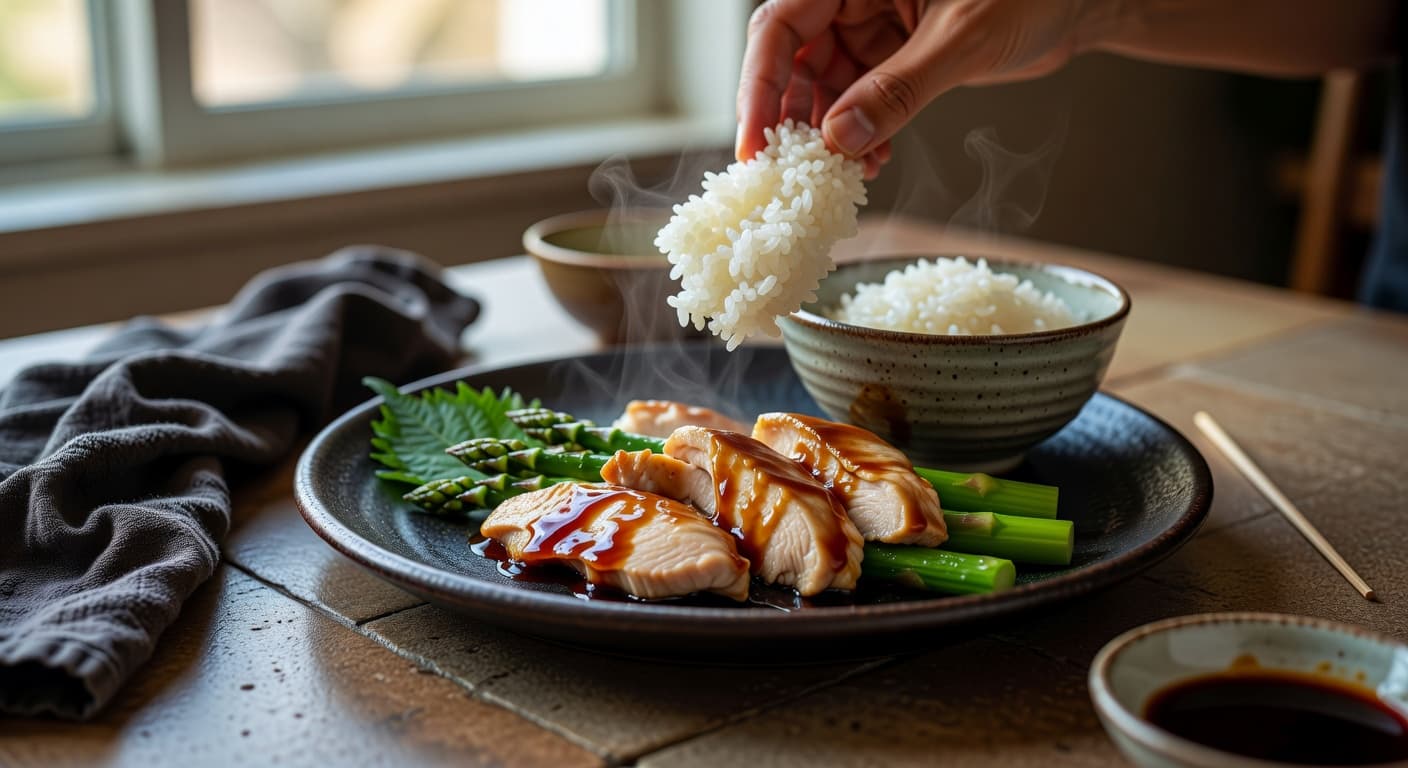
People focus on the chicken — and fair enough, it's the star — but the scallion rice is what makes this a complete dinner instead of just a protein with sides. Short-grain Japanese rice has a starchier, stickier texture than long-grain, which means it holds together under the weight of the glaze without turning to mush. Folding in the white parts of the scallion with a pat of butter while the rice is still hot is the move: the butter melts in and the scallion softens just enough to lose its raw bite. The dark green tops go on at the end, fresh and bright, which gives you two different scallion notes in the same bowl — one mellow and buttery, one clean and sharp. That contrast is what keeps each bite interesting.
Sourcing the Right Mirin Makes a Difference
If you're reaching for a bottle of mirin at the grocery store, flip it over and check the ingredients. A lot of what's on the shelf is sweetened rice seasoning — corn syrup, salt, and a little rice wine — and it'll give you sweetness but not much else. What you want is hon-mirin, true fermented mirin, which has a depth and complexity that the imitation stuff simply can't replicate. It's the difference between a glaze that tastes like candy and one that tastes like it was actually cooked. Same goes for sake — don't reach for the cooking sake with added salt. A basic drinking sake is better every time.
Substitutions that still taste like the recipe.
Need to work with what's in the fridge? Here are the best swaps for the key ingredients — ranked by how well they hold up in this dish.
- fish sauce
Shares pyrazine compounds with soy sauce
- liquid aminos↓ savory
Shares pyrazine compounds with soy sauce — less savory
- MSG↓ salty
Shares acid compounds with soy sauce — less salty
- rice wine↓ sweet
Shares fruity ester compounds with mirin — less sweet
- port wine
Shares fruity ester compounds with mirin
- white wine↓ sweet
Shares acid compounds with mirin — less sweet
- broccolini
Shares sulfur compounds with asparagus
- eggplant
Shares pyrazine compounds with asparagus
- potato
Shares pyrazine compounds with asparagus
- fufu flour
Shares maillard compounds with white rice
- tapioca starch
Shares maillard compounds with white rice
- flour
Shares maillard compounds with white rice
A Strong Plate That Wants a Little Green on the Side
This bowl does a lot of heavy lifting on protein and whole grains — two chicken breasts and a cup of short-grain rice cover a serious portion of what most people need in a day from those categories. What it doesn't cover is vegetables and fruit, so if you're feeding the family and want a fuller plate, add a simple cucumber salad with rice vinegar, or a wedge of orange on the side. The asparagus is in there and it counts, but it's a supporting player, not a full vegetable serving. The sodium is moderate — the soy sauce carries most of it — so if you're watching that, a low-sodium soy sauce swap keeps everything else intact.
Common questions
Can I use chicken thighs instead of chicken breast?
What if I don't have sake?
My glaze keeps breaking and going greasy — what am I doing wrong?
Can I make the teriyaki sauce ahead of time?
How do I know when the glaze is ready to add the chicken back?
This is the kind of dinner that reminds me why I love cooking for my family — not complicated, not fussy, but made with care and a little patience. That glaze doesn't come from a bottle. It comes from taking five extra minutes to reduce the sauce properly, from salting the chicken at the right time, from folding butter into the rice while it's still steaming. Those small things are the difference between food that's fine and food that makes everyone go quiet for a minute because they're too busy eating to talk. Fire up something good tonight — your family will know the difference.
The Quarterly
Get the next Quarterly from Dan Cooks
Seasonal recipes, notes, and the issue links worth saving.
Comments