The Miso-Glazed Salmon That Tastes Like a Restaurant Forgot to Charge You
Rich, caramelized miso glaze. Crisp spring vegetables. A bright mint-and-lemon finish that cuts right through the richness. This is the weeknight dinner that makes the whole family go quiet at the table — in the best…
 Dan Cooks7 min readPrint this post
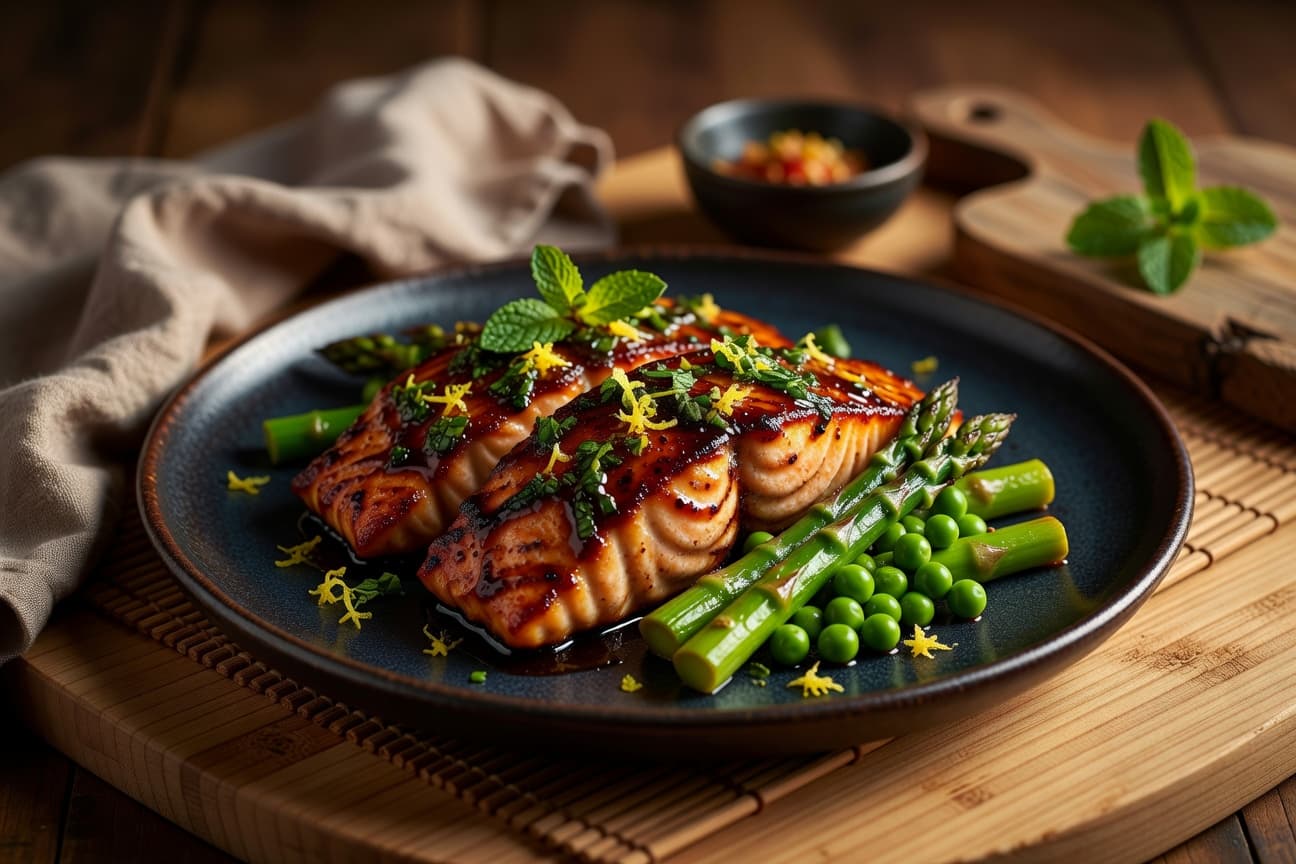
The best meals aren't measured by perfection — they're measured by the memories made around the table.
I'll be honest with you — I'm a grill man through and through. Give me a cast iron over open coals and a cold sweet tea in hand, and I'm right where I belong. But every now and then, even I get pulled inside by something that deserves the full attention of a hot skillet and a little patience. This miso-glazed salmon is one of those dishes.
I first started playing with miso glazes because I wanted that same deep, lacquered crust I chase on a great piece of grilled chicken — that caramelized, slightly sticky bark that makes you reach for another piece before you've finished the first. Turns out, miso does that better than almost anything. It's fermented, it's salty-sweet, and when it hits a hot pan, it transforms into something that tastes like it took all day. It didn't. Start to finish, you're sitting down in 35 minutes.
This one's for the family table — the kind of dinner where my wife raises an eyebrow after the first bite and says, "You made this on a Tuesday?" Yeah. I did. And so can you.
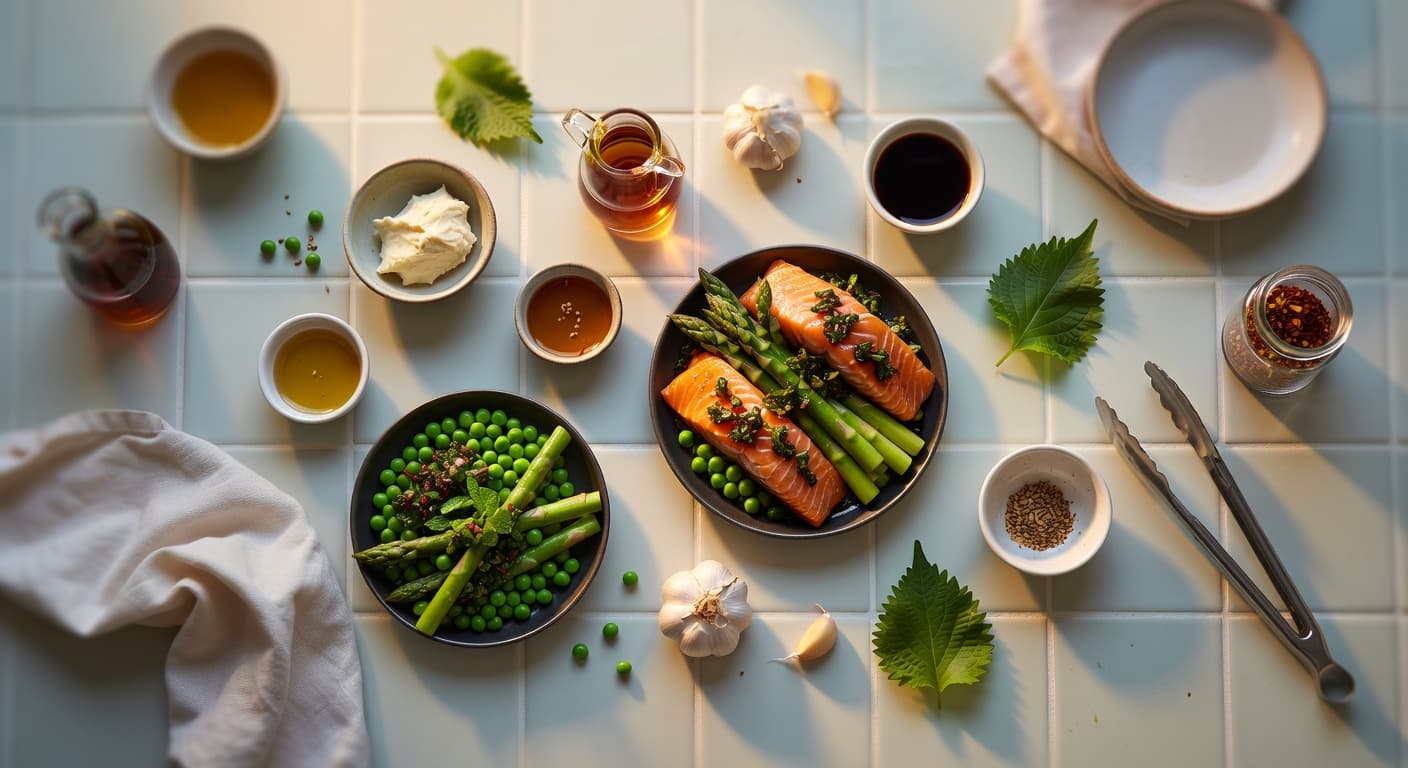
30 minutes, and you’re ready to cook.
Mise en place makes this dinner feel effortless. Get everything prepped and staged before you light the burner — the actual cooking moves fast.
- Gather EquipmentGather a small bowl for the miso glaze, a small bowl for the mint gremolata, a medium pot for blanching, a bowl of ice water, a cast iron skillet, a small bowl for drained vegetables, paper towels, tongs, a spatula, a whisk, a box grater or microplane, a cutting board, a sharp knife, and measuring spoons.
- Prepare the Garlic (For Miso Glaze)Peel 2 cloves of garlic and mince finely to yield about 1 teaspoon. Place in a small prep container.1 min
- Prepare the Salmon FilletsPat the 2 salmon fillets dry with paper towels. Season the flesh side (top) of each fillet with ¼ teaspoon black pepper, dividing evenly. Place on a clean plate or cutting board, skin-side down, ready for glazing.2 min
- Whisk the Miso GlazeIn a small bowl, whisk together 3 tablespoons white miso paste, 2 tablespoons mirin, 1 tablespoon soy sauce, 1 teaspoon sesame oil, 1 teaspoon honey, and the minced garlic until smooth and well combined. Set aside.2 min
- Prepare the AsparagusRinse the ½ lb asparagus under cold water. Trim the woody bottom 1–2 inches from each spear (snap or cut at the natural breaking point). Pat dry and place on a cutting board, ready for blanching.2 min
- Measure the PeasIf using fresh peas, shell them to yield ¾ cup. If using frozen peas, measure out ¾ cup and place in a small prep container. Keep at room temperature until blanching.1 min
- Prepare the Lemon (For Gremolata)Rinse the lemon under cold water. Using a microplane or the fine side of a box grater, zest the lemon to yield about 1 tablespoon zest, avoiding the bitter white pith. Place zest in a small prep container. Cut the lemon into wedges for serving and set aside.2 min
- Prepare the Fresh MintRinse the fresh mint and pat dry. Remove leaves from stems and discard stems. Chop the mint finely to yield ¼ cup. Place in a small prep container.2 min
- Prepare the Garlic (For Gremolata)Peel 1 clove of garlic and mince finely to yield about ½ teaspoon. Place in a small prep container.45s
- Measure OilsMeasure 1 tablespoon olive oil for searing the salmon and 1 tablespoon olive oil for sautéing the vegetables into separate small containers. Measure 1 teaspoon olive oil for the gremolata into a third small container.30s
- Stage Ingredients Near the StoveArrange all prepped containers in cooking order: the miso-glazed salmon fillets (on their plate), the miso glaze bowl, the asparagus, the peas, the 1 tablespoon olive oil for searing, the 1 tablespoon olive oil for sautéing, the drained vegetables bowl, the mint gremolata ingredients (chopped mint, lemon zest, minced garlic, 1 teaspoon olive oil, sea salt pinch), the sesame seeds, and lemon wedges. Have paper towels and tongs within arm's reach of the stove.
Three moves make or break this recipe.
Three moves separate a good miso salmon from a great one. Don't skip any of them.
Bake at 400°F for 10–12 min depending on fillet thickness. Glaze in the last 2 min only — miso burns fast above 450°F.
- Salt fillets, rest on a rack 15–30 min, pat completely dry before glazing
- Apply glaze in two thin coats — one before the oven, one in the final 2 minutes
- Pull the fish at 125°F internal for medium; carryover will finish it
The Glaze Is Everything — Here's How to Not Blow It
The miso glaze on this salmon is doing a lot of heavy lifting, and it rewards you for treating it right. The combination of miso, soy sauce, and mirin isn't just flavor — it's a Maillard machine. Both miso and soy are fermented, which means they're already loaded with roasted, nutty depth before heat ever touches them. When you add the sweetness from the mirin and just a touch of honey, you've got a glaze that caramelizes fast and hard. That's a good thing — until it isn't.
Here's the move: apply the glaze in two stages. Half goes on the flesh side before the fish ever sees the pan, letting it marinate for at least 10 minutes. The second half goes on after you flip, right when the skin side is already golden and crisp. That second coat caramelizes in the final 2–3 minutes without burning. If you try to glaze it all at once from the start, the sugars scorch before the fish is cooked through. Patience on the flip.
Also — and I cannot stress this enough — pat the fillets completely dry before the glaze goes on. Salt draws moisture to the surface; dry the fish, then glaze. A wet fillet steams in the pan instead of searing, and you'll lose that crust entirely. Press the skin down…
- garlic + olive oilBoth carry piney, citrusy, clove-like and smoky notes.
- garlic + black pepperBoth carry piney, citrusy, earthy and roasted notes.
- mirin + soy sauceBoth carry tangy notes.
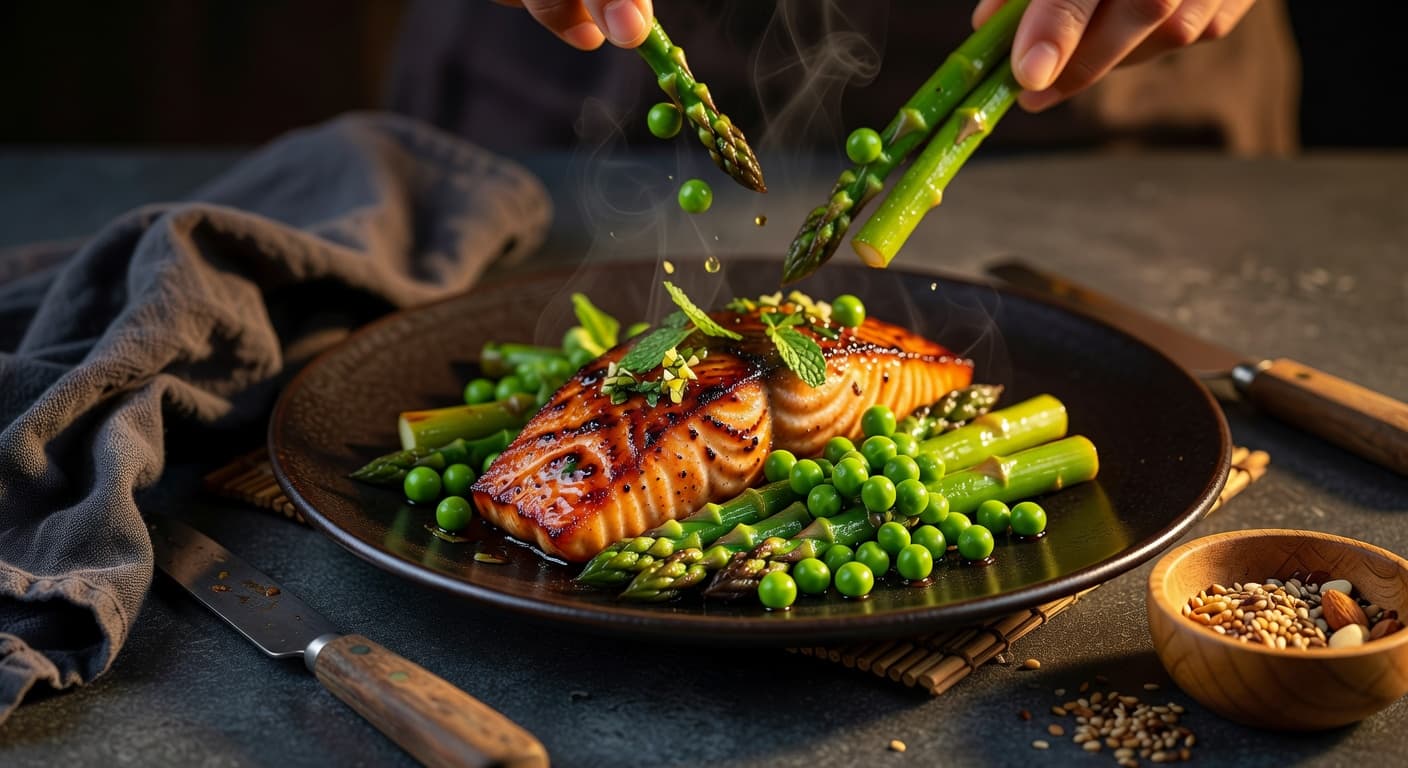
There's a reason chefs salt fish before cooking it — and it goes deeper than seasoning. Here's what's actually happening.
Salt-cure surface prep on fish
Salt pulls moisture via osmosis, firms the flesh, and prevents albumin bleed. This step is what separates a clean miso crust from a sticky, wet mess on the sheet pan.
Why the Mint Gremolata Isn't Optional
I know what you're thinking — it's a garnish, I can skip it. Don't. The mint-and-lemon gremolata is the reason this dish feels complete rather than heavy. Salmon is a rich, fatty fish, and the miso glaze doubles down on that savory weight. Without something bright to cut through it, you'd be halfway through the plate and reaching for water.
Lemon and salmon are one of those pairings that just works on a deep level — the citrus has a natural affinity for the fatty, slightly marine character of the fish. They resonate rather than clash. And the mint adds a cooling, fresh layer that plays against the warm, caramelized glaze in a way that makes every bite feel balanced. Here's the detail that matters: use the lemon zest generously, not just the juice. The zest carries the concentrated aromatic oils that do the real lifting — the juice alone gives you acid, but the zest gives you brightness and lift. Make the gremolata fresh, right before you plate. It loses its punch if it sits too long.
Lemon is the top pairing partner for salmon in this recipe — here's why that combination scores so high and how to make the most of it.
SalmonLemon
Score 88Both carry fresh notes.
Olive OilLemon
Score 88Mediterranean dressing. Both carry piney and fresh notes.
Black PepperLemon
Score 88Both carry piney notes.
Sourcing: Two Ingredients Worth Getting Right
Most of this recipe is forgiving — but two pantry items will make or break the glaze, and they're worth a moment at the store.
First, the miso: reach for white miso, also labeled shiro miso. It's lighter in salt and has a cleaner, sweeter flavor than red miso, which would overpower the fish. Most grocery stores carry it in the refrigerated section near the tofu.
Second, the mirin: look for a bottle that says "hon mirin" on the label. That's the real thing — fermented rice wine with natural sweetness. Anything labeled "mirin-style seasoning" or "aji-mirin" is mostly corn syrup and will throw off the balance of the glaze. The difference in price is usually a dollar or two, and it's worth every cent.
- Contains
- wheat, gluten, soy, fish, sesame
- Fits
- Pescatarian, Dairy-Free, Nut-Free, Kosher
Halal and kosher also depend on how the ingredients are sourced and certified.
Substitutions that still taste like the recipe.
Can't find something, or cooking for a different crowd? Here are the swaps that hold up best without losing the soul of the dish.
- fermented black beans
Lacks the toasted and browned notes.
- doenjang
Lacks the toasted and browned notes.
- black bean paste↓ savory
Lacks the earthy and roasted notes; less savoury depth.
- ruby port
Brings clove-like and smoky notes.
- makgeolli↓ sweet
Juicier; fermented funk.
- sake↓ sweet
Sharper.
- lobster↓ fatty
Leaner; more delicate.
- scallop↓ fatty
Leaner; sweeter-bodied.
- marlin
Lacks the earthy and roasted notes.
- tarragon
Brings clove-like and smoky notes.
- dill
Brings fresh and grassy notes.
- basil
Brings clove-like, smoky, fresh and grassy notes.
- lime
- grapefruit↓ sour
Less aromatic.
- calamansi
Lacks the fresh and grassy notes; juicier; less acidic.
A few things the data flagged that are genuinely worth knowing before you cook this.
Salt the fish before the glaze goes on
The triggered chemistry here is real: salt draws surface moisture out through osmosis, firms the flesh, and stops white albumin from bleeding out during cooking. Pat dry, salt, rest 15–30 minutes on a rack, pat dry again. Then glaze. You'll get a cleaner sear and the miso crust will actually stick.
Miso + soy is a double pyrazine hit
Both miso and soy sauce carry pyrazine and Maillard compounds from fermentation. When they hit oven heat together, you're amplifying the same roasted, nutty notes twice over. Don't thin the glaze too much — you want it to lacquer, not steam.
Lemon and salmon are a natural bridge
Salmon and lemon share aldehyde and terpene compound families, which is why the pairing scores so high. The gremolata's lemon zest does more work than the juice — zest delivers concentrated terpenes that lift the fatty richness without drowning it in acid.
Added sugar is running high — watch the glaze quantity
Between the mirin and honey, added sugar in this recipe is well above threshold. That's fine for flavor, but if you're reducing the glaze separately, pull it early — it goes from lacquer to burnt quickly, and scorched miso is bitter in a way you can't fix.
This is a protein-forward dinner with real vegetables and healthy fats. Here's the honest picture — strong where it counts, with a couple of things worth knowing.
Food groups measured against a 2,000-calorie day
- ✓ Covers 79% of your daily protein
- ✓ Covers 89% of your daily healthy fats
- • No dairy in this recipe
- • No fruits in this recipe
Strong in protein, whole grains, and healthy fats, light on dairy and fruits.
- Produce
- $12.50
- Seafood
- $3.00
- Beverages
- $0.45
- Nuts & Seeds
- $0.24
- Pasta & Grains
- $0.75
- Condiments & Sauces
- $0.93
- Oils & Vinegars
- $0.62
- Spices & Seasonings
- $0.05
- Baking
- $0.06
Some prices are estimates.
Common questions
Can I make this gluten-free?
Can I grill the salmon instead of pan-searing it?
How do I know when the salmon is done?
Can I prep any of this ahead of time?
What should I serve this with besides rice?
This dish reminds me of something my grandmother used to say — that the best food doesn't need to announce itself. It just shows up, does its job, and leaves everyone at the table a little happier than they were before. That's what this salmon does. The glaze is bold, the vegetables are bright, and the gremolata ties it all together in a way that feels both simple and special.
Make it on a Tuesday. Make it for a Friday night when you want something that feels like an occasion without the fuss. Make it for the people around your table who deserve a meal made with care. That's always been the whole point for me — family first, fire always, and food that shows love through flavor.
Fire up something good today.
The Quarterly
Get the next Quarterly from Dan Cooks
Seasonal recipes, notes, and the issue links worth saving.

Comments