One-Pot Mac and Cheese: Creamy, Rich, and Ready in 25 Minutes
No roux, no draining, no fuss — just pasta cooked right in seasoned milk and broth until it builds its own silky sauce. Sharp cheddar, Gruyère, and a secret emulsifier make this weeknight mac unforgettable.
 Dan Cooks6 min readPrint this post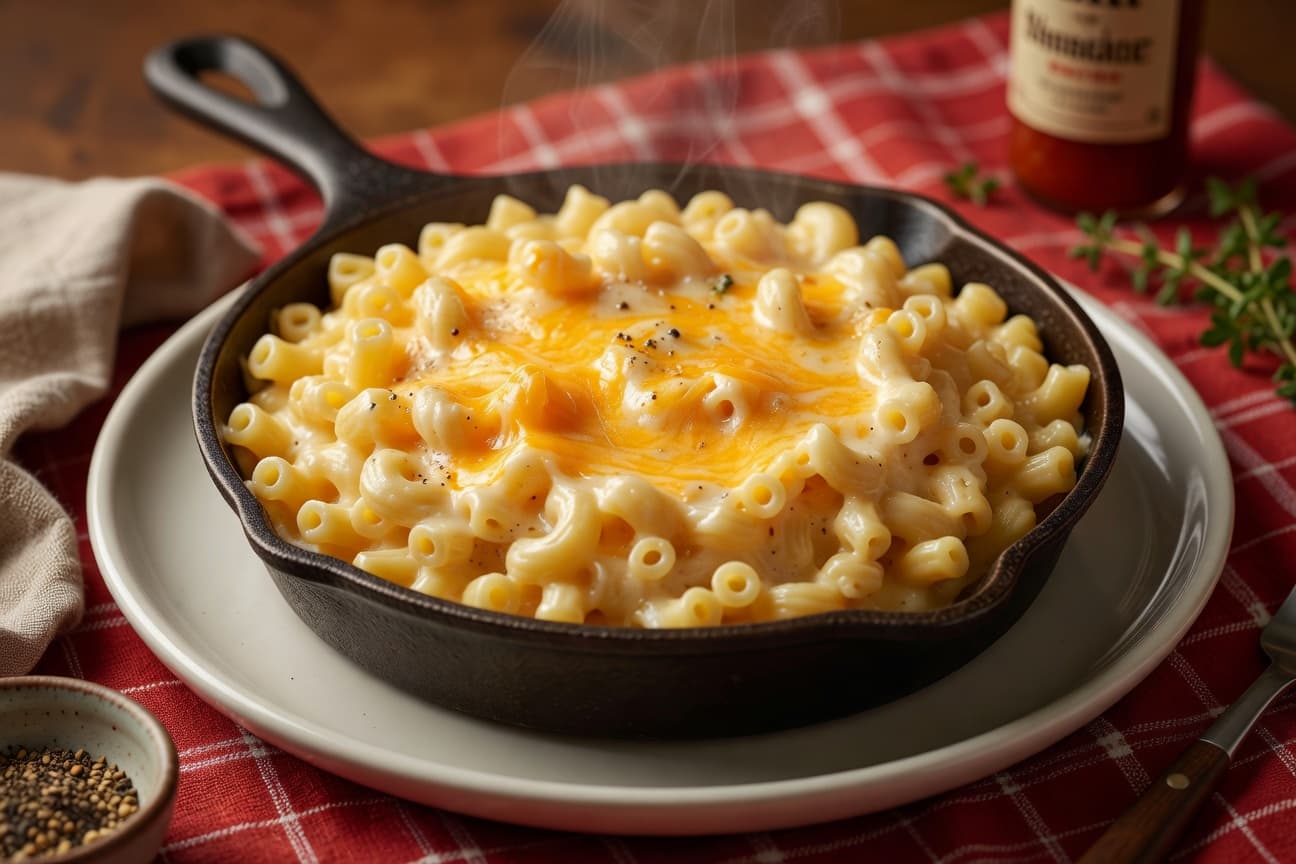
The best meals aren't measured by perfection — they're measured by the memories made around the table.
Some nights the grill stays cold. The Florida heat breaks late, the kids are already at the table, and what the family needs is something warm, rich, and ready before anyone starts raiding the snack cabinet. That's when this one-pot mac and cheese earns its place in my rotation. No separate pot of boiling water, no draining, no roux to babysit. You drop the pasta right into a mix of milk and chicken broth, season it boldly, and let the starch do what starch does — build a sauce from the inside out. Finish it with three layers of cheese and you've got a bowl that tastes like it took all afternoon. It didn't. Twenty-five minutes, one pot, and the whole family's happy. That's my kind of weeknight cooking.
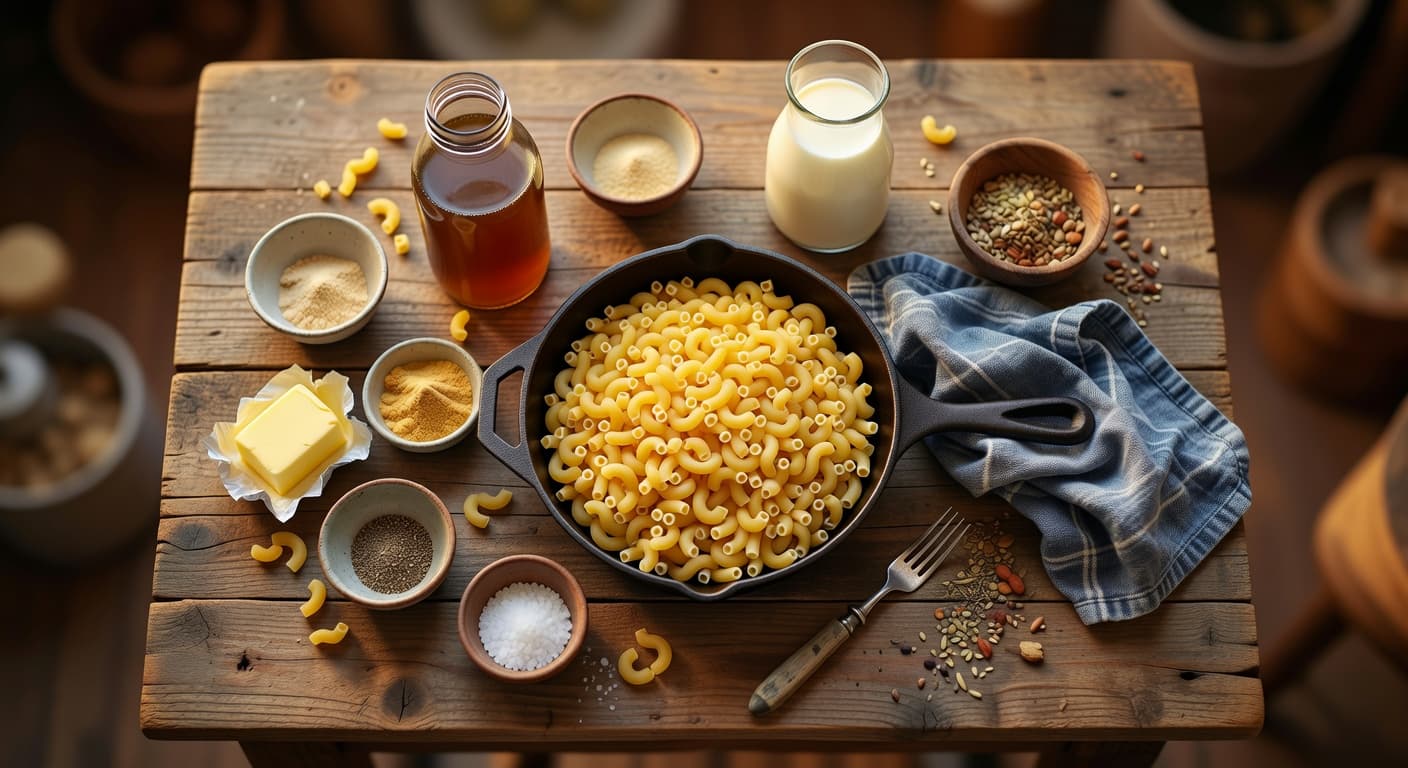
25 minutes, and you’re ready to cook.
Most of the work here is just grating cheese and measuring spices — five minutes of mise en place and you're ready to cook.
- Gather EquipmentGather a medium saucepan or small Dutch oven, a wooden spoon or silicone spatula for stirring, a measuring cup, measuring spoons, a box grater or microplane, a small cutting board, a chef's knife, and a serving spoon. Have warm bowls ready for serving.
- Prepare the Sharp Cheddar CheeseUsing a box grater or microplane, grate the sharp cheddar cheese on the fine side until you have ¾ cup. Place in a small prep bowl.2 min
- Prepare the Gruyère CheeseUsing a box grater or microplane, grate the Gruyère cheese on the fine side until you have ¼ cup. Place in the same prep bowl as the cheddar, or in a separate small bowl.1 min
- Prepare the Cream CheeseCut the cream cheese into small pieces (about ½-inch cubes) to help it melt quickly and evenly. Place in a small prep bowl.30s
- Chop the Fresh ChivesRinse the fresh chives and pat dry. Chop finely to yield about 1 tablespoon. Place in a small prep bowl.45s
- Measure SpicesMeasure out ½ tsp kosher salt, ½ tsp garlic powder, ¼ tsp mustard powder, ¼ tsp black pepper, and ⅛ tsp smoked paprika. Place all spices in a small bowl or ramekin for easy access.1 min
- Measure Liquids and PastaMeasure 1½ cups elbow macaroni, 1 cup chicken broth, and 1 cup whole milk. Place the pasta in a small bowl and the liquids in separate measuring cups. Measure out 1 tbsp butter and place it near the stove.2 min
- Stage IngredientsArrange all prepped ingredients near the stove in order of use: pasta and liquids closest to the pot, followed by butter and spices, then cream cheese pieces, then the grated cheddar and Gruyère, then the chopped chives and smoked paprika for garnish. Have a small splash of extra milk nearby in case the sauce needs loosening.
Why Cooking Pasta in Milk and Broth Actually Works
Here's the thing about this method that surprises people: it's not a shortcut, it's a technique. When elbow macaroni simmers directly in your liquid, it releases surface starch continuously into the pot. That starch acts as a natural thickener — by the time the pasta is tender and the liquid is mostly absorbed, you've already got a sauce base without touching a single tablespoon of flour. The key is keeping the heat at a steady medium-low once it comes to a boil, and stirring every minute or two so nothing scorches on the bottom. You want the liquid to look nearly gone but the mixture still a little loose — it tightens up fast once the cheese goes in. Pull the pot off the heat before you add any cheese. Hard cheeses like cheddar and Gruyère will seize and turn grainy if they hit a boiling liquid. Let things calm down for half a minute, then stir in the cream cheese first, followed by the grated cheeses in two or three additions. Residual heat does all the melting work you need.
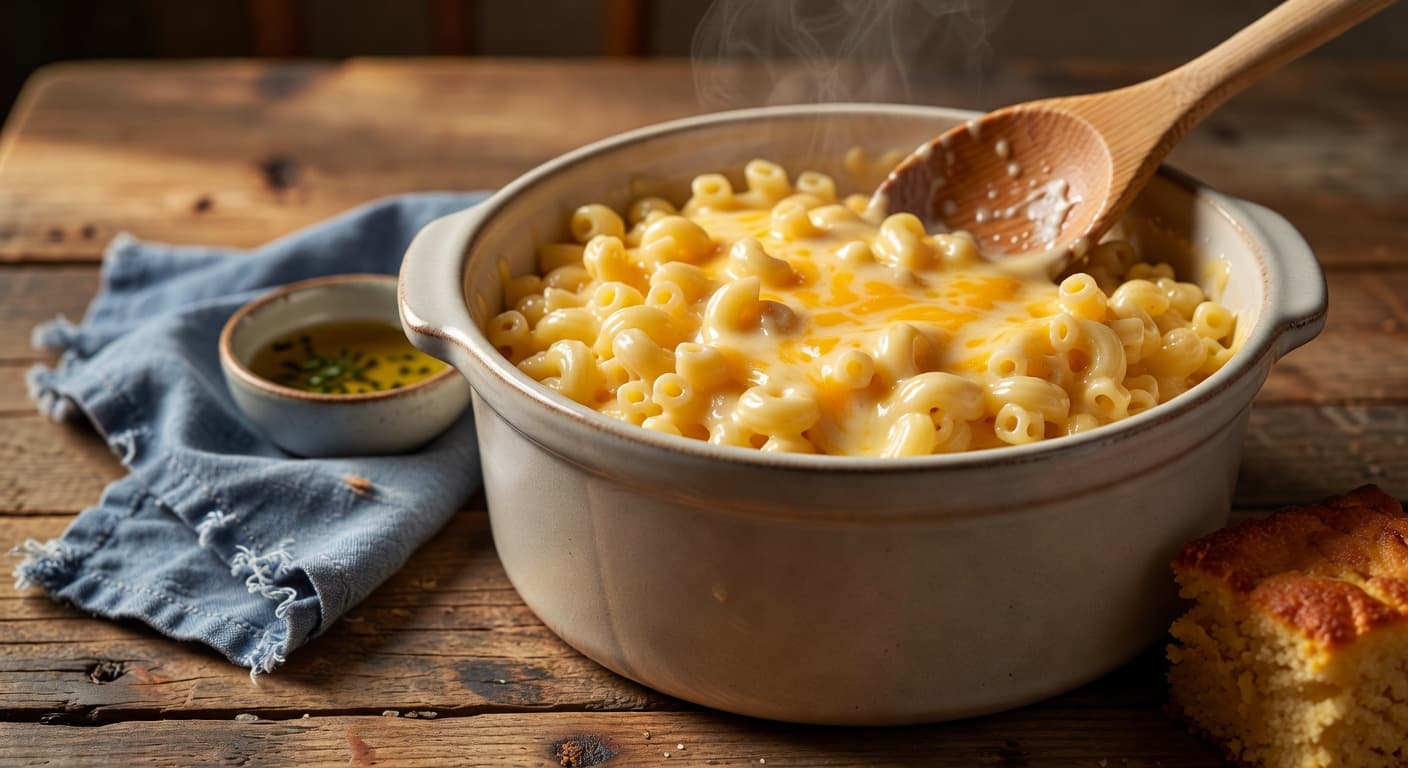
The Cheese Trio: Why Each One Is Pulling Its Weight
I'll be honest — when I first saw cream cheese on a mac and cheese ingredient list, I raised an eyebrow. But it's not there for flavor. Cream cheese is doing structural work. It's high in fat and protein, and those proteins sit right at the boundary between the fat and the water in your sauce, holding everything together so it doesn't break into a greasy mess when the cheddar and Gruyère go in. Sharp cheddar brings the familiar tang and bite you expect — look for something aged at least a year for real depth. Mild cheddar will taste flat here; you need that sharpness. Then there's the Gruyère. Don't swap it out for more cheddar. Gruyère carries a nuttier, slightly sweet finish that lifts the whole sauce and keeps it from tasting one-dimensional. And the mustard powder? You won't taste mustard. What you'll taste is depth — a background warmth that makes the cheese flavor feel rounder and more complex. It blooms in the butter's fat and distributes through the whole pot. That's the same principle behind a good béchamel, just without the extra step.
Sourcing Tips: Where to Spend and Where to Save
This recipe is simple enough that ingredient quality shows up directly in the bowl. The two places worth paying attention to: the cheddar and the Gruyère. For cheddar, reach for something labeled sharp or extra-sharp, aged at least 12 months. The longer it ages, the more bite and complexity it develops — that's what makes the sauce taste like something, not just cheesy. For the Gruyère, buy a block and grate it yourself. Pre-shredded cheese is coated with starches that prevent clumping in the bag, but they also prevent smooth melting in your sauce. Two extra minutes with a box grater is worth it every time. Everything else — the broth, the pasta, the spices — is pantry-staple territory. No need to overthink it.
Substitutions that still taste like the recipe.
Need to work with what's in the pantry? Here are the swaps that hold up best in this recipe.
- rigatoni
Shares maillard compounds with elbow macaroni
- penne
Shares maillard compounds with elbow macaroni
- linguine
Shares maillard compounds with elbow macaroni
- half and half
Shares lactone compounds with whole milk
- low-fat milk↓ fatty
Shares lactone compounds with whole milk — less fatty
- whipped cream↑ fatty
Shares lactone compounds with whole milk — more fatty
- pecorino cheese
Shares lactone compounds with gruyere cheese
- parmesan cheese
Shares lactone compounds with gruyere cheese
- blue cheese
Shares lactone compounds with gruyere cheese
- goat cheese
Shares acid compounds with cream cheese
- brie
Shares lactone compounds with cream cheese
- queso fresco
Shares lactone compounds with cream cheese
- five-spice
Shares phenolic compounds with smoked paprika
- tandoori masala
Shares terpene compounds with smoked paprika
- garam masala
Shares terpene compounds with smoked paprika
Common questions
Can I double this recipe for a bigger family?
What if my sauce breaks and looks greasy?
Can I make this ahead of time?
Can I use vegetable broth instead of chicken broth?
What goes well alongside this as a weeknight dinner?
There's something deeply satisfying about a recipe that delivers this much comfort with this little effort. One pot, one stove, twenty-five minutes — and you're setting down a bowl that the whole family leans into. My wife lights up every time I make this. My kids scrape the pot. That's the measure I care about. The technique is sound, the cheese combination is deliberate, and once you make it once, you'll have it memorized. Fire up something good tonight — even if it's just the stovetop.
The Quarterly
Get the next Quarterly from Dan Cooks
Seasonal recipes, notes, and the issue links worth saving.
Comments