Cast Iron Ribeye That Tastes Like a Steakhouse — Made Right at Home
Butter-basted ribeye with golden herb-roasted potatoes and honey-glazed carrots. This is the dinner that makes the whole family go quiet at the table — in the best possible way.
 Dan Cooks7 min readPrint this post
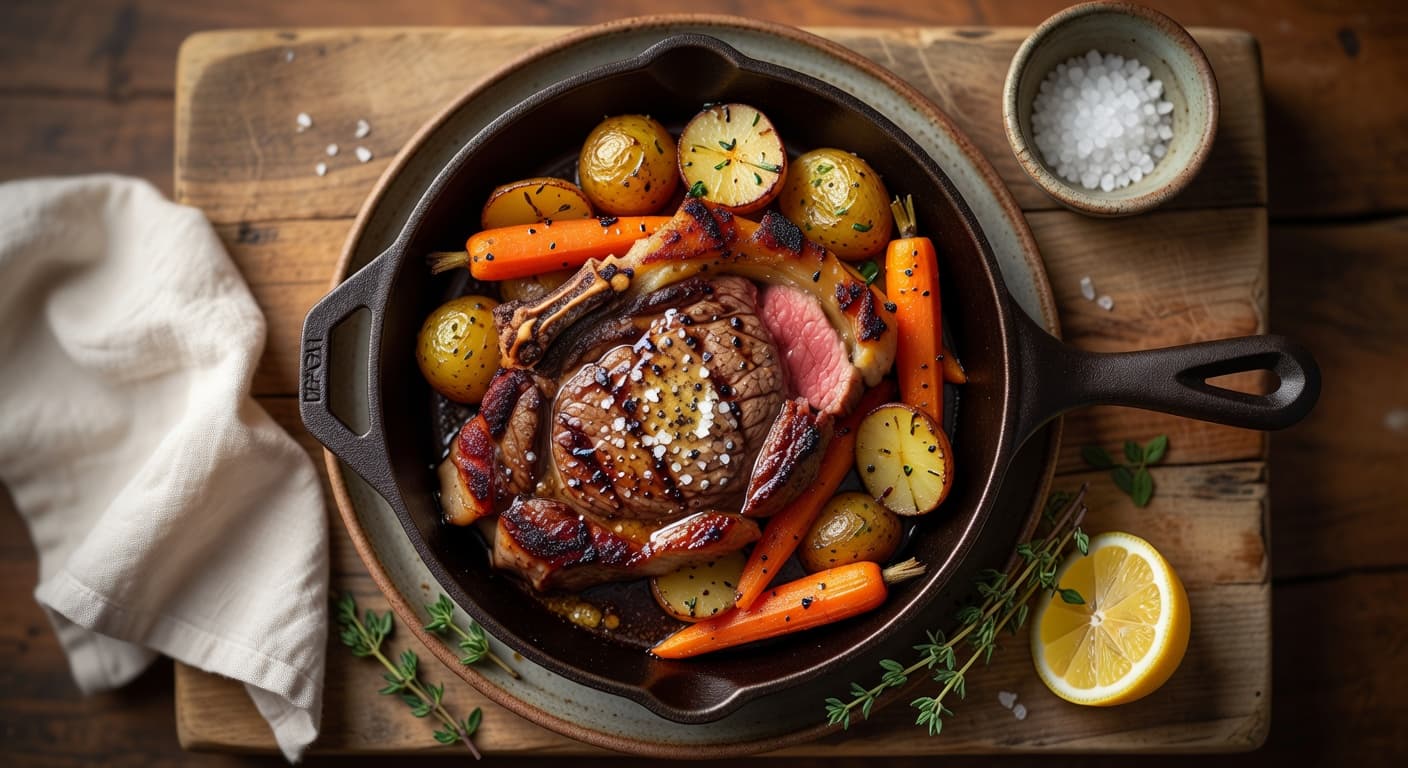
The best meals aren't measured by perfection — they're measured by the memories made around the table.
Some nights you want to do something special for the people you love — not a reservation, not takeout, but something you made with your own hands that hits the table still sizzling. This is that dinner. A thick ribeye, seared hard in a cast iron skillet until it builds a deep mahogany crust, then finished in a pool of foaming butter with smashed garlic and fresh herbs. On the side, baby potatoes roasted cut-side down until they're crispy and golden, and carrots glazed with honey until the edges caramelize into something almost candy-sweet. It's the kind of meal my grandmother would've called 'company food' — except we make it on a Tuesday because life's too short to save the good stuff.
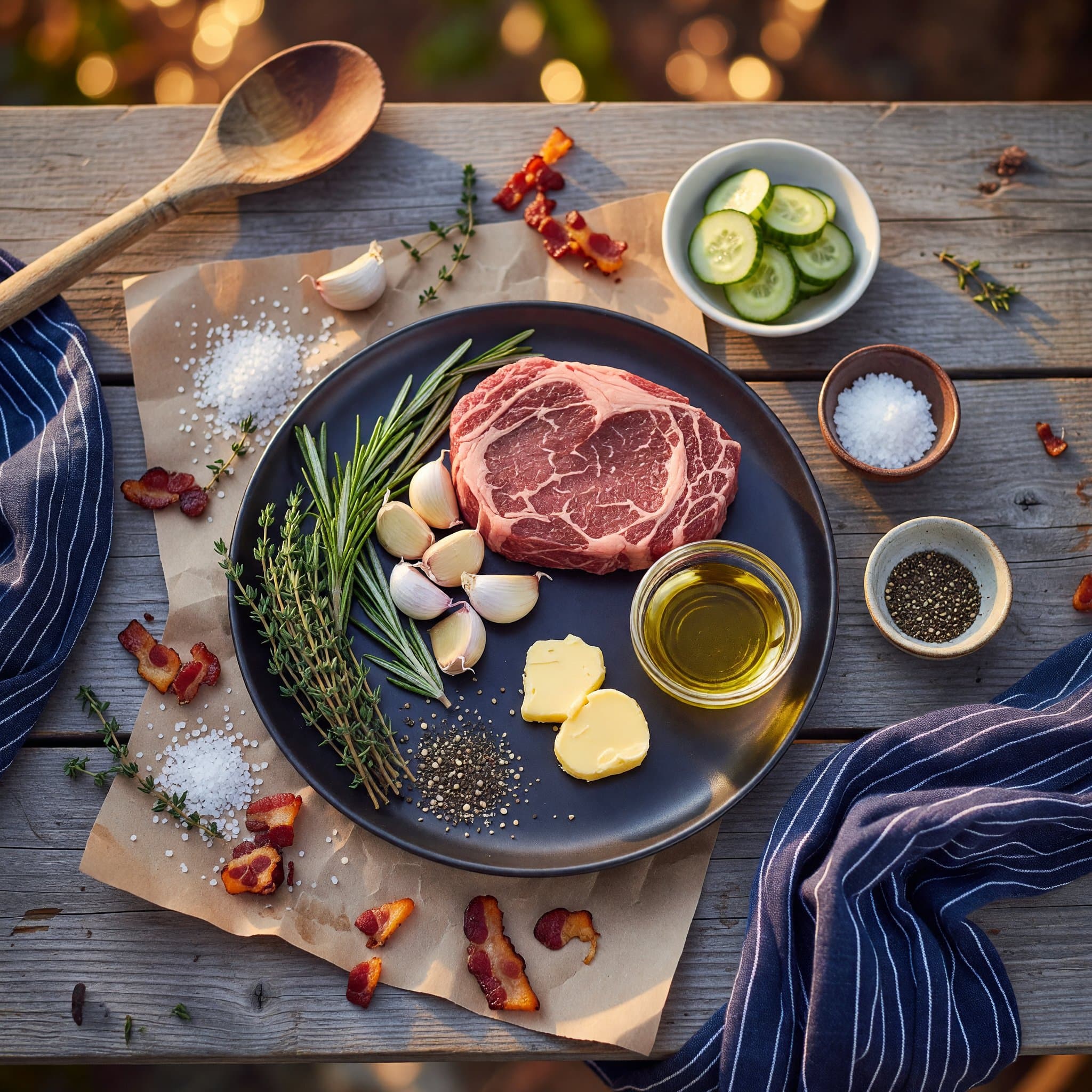
Three moves make or break this recipe.
Three moves make or break this dish. Get these right and everything else falls into place.
Cast iron at high heat 2–3 min per side for a 1-inch ribeye to reach medium-rare (130°F internal). Baste with butter for the final 60–90 seconds only.
- Pat the ribeye completely dry before seasoning — surface moisture is the enemy of crust
- Sear undisturbed until the steak releases naturally from the pan, then flip once
- Rest the steak at least 5 minutes tented loosely; cutting early loses the juice you worked for
The Sear Is Everything
Here's the truth about cast iron ribeye: the pan does most of the work, but only if you let it. Start by patting the steaks completely dry — and I mean bone dry, every bit of surface moisture gone. Moisture is the enemy of crust. Season generously with kosher salt and black pepper, pressing it in, then let the steaks sit out for 30 minutes. A cold steak hitting a hot pan steams instead of sears.
When it's time to cook, get that cast iron screaming hot — two to three minutes over high heat until you see the first wisps of smoke. Add the avocado oil (it handles that heat without burning), then lay the steaks away from you into the pan. Don't touch them. Don't peek. Don't move them around. Let the Maillard reaction do its work and build that deep, mahogany crust. After three minutes, flip once. Two more minutes on the second side.
Now comes the magic: drop the heat to medium, add your butter, smashed garlic, rosemary, and thyme. As the butter melts and foams, tilt the pan and start basting — spooning that fragrant, herb-infused butter over the steaks continuously for 60 to 90 seconds. The butter carries all those herb and garlic flavors straight into the crust. This is the step…
- fresh rosemary + fresh thymeBoth carry piney, citrusy, clove-like and smoky notes.
- fresh rosemary + dried thymeBoth carry piney, citrusy, clove-like and smoky notes.
- fresh thyme + dried thymeBoth carry piney, citrusy, clove-like and smoky notes.
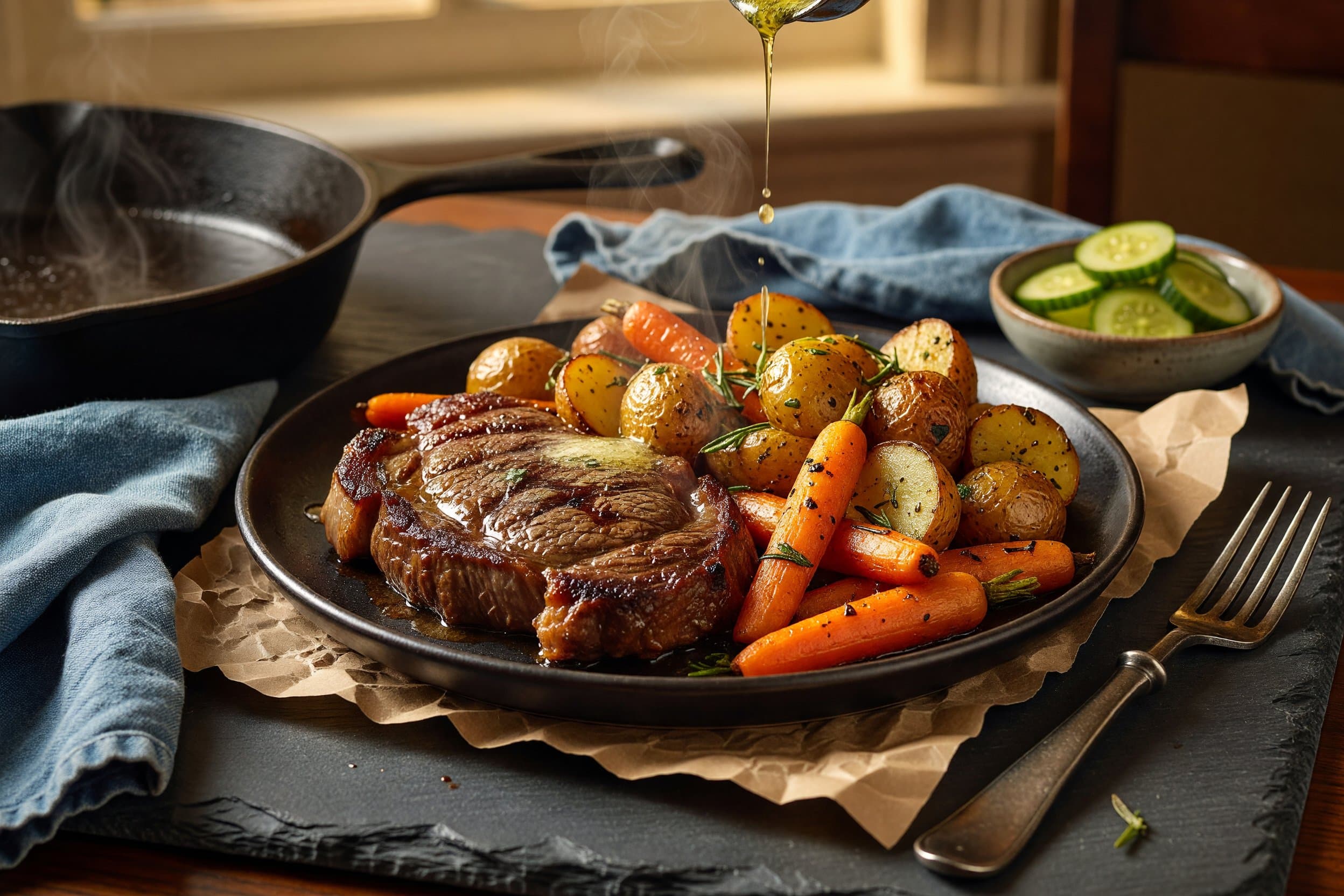
Why the Rest Matters as Much as the Sear
Pull the steaks off the heat at 130–135°F for medium-rare, or 140–145°F for medium. Then put them somewhere warm and walk away for at least five minutes. I know it's hard — the smell alone will have everyone hovering — but cutting too early means all those juices run straight onto the cutting board instead of staying in the meat. The rest is not optional. Tent loosely, set a timer, and go check on your vegetables.
30 minutes, and you’re ready to cook.
Get your mise en place sorted before anything hits the heat. The steak moves fast once the pan is hot — you want everything within arm's reach.
- Gather EquipmentGather a cast iron skillet, sheet pan, cutting board, sharp knife, paper towels, measuring spoons, measuring cups, small bowls for prepped ingredients, a large spoon for basting, an instant-read thermometer, and a warm serving plate or cutting board for resting the steaks.
- Preheat the OvenPreheat your oven to 425°F.
- Prepare the Ribeye SteaksRemove the steaks from the refrigerator and pat them completely dry with paper towels. Season both steaks generously on all sides with 1½ teaspoons kosher salt and 1 teaspoon black pepper, pressing the seasoning in gently. Set aside on a plate to come to room temperature.
- Prepare the GarlicPeel 4 garlic cloves and lightly smash them with the flat of your knife. Place in a small bowl.1 min
- Prepare the Fresh HerbsRinse and pat dry 3 sprigs fresh rosemary and 4 sprigs fresh thyme. Place them together in a small bowl.1 min
- Prepare the Baby PotatoesRinse the baby potatoes and pat dry. Halve them, ensuring the cut sides are flat. Place in a large bowl.2 min
- Prepare the CarrotsPeel the 3 carrots and trim the ends. Cut them into 2-inch pieces on the bias. Place in the bowl with the potatoes.2 min
- Measure Spices for VegetablesMeasure out ½ teaspoon garlic powder, ½ teaspoon dried thyme, ¾ teaspoon kosher salt, and ¼ teaspoon black pepper into a small bowl.30s
- Prepare the Vegetable Roasting MixturePour 2 tablespoons olive oil and 1 tablespoon honey over the potatoes and carrots. Add the measured spice mixture. Toss everything together until the vegetables are evenly coated. Spread in a single layer on a sheet pan with the potatoes cut-side down.1 min
- Measure Cooking Fats and Fresh ParsleyMeasure 1 tablespoon avocado oil into a small bowl. Finely chop the fresh parsley to yield about 2 tablespoons and place in a small bowl.1 min
- Measure ButterMeasure 3 tablespoons butter and place in a small bowl near the stove.30s
- Stage IngredientsArrange all prepped ingredients near the stove in cooking order: the seasoned steaks on a plate, the sheet pan with vegetables ready to go into the oven, the avocado oil, the smashed garlic cloves, the fresh herb sprigs, the butter, and the fresh parsley. Have your instant-read thermometer and large spoon within reach.
The Vegetables Aren't an Afterthought
A ribeye this rich needs sides that can hold their own. The baby potatoes go into a 425°F oven cut-side down — that flat surface against the hot sheet pan is what gives you the crispy, golden bottom you're after. The carrots get tossed with honey before roasting, and that glaze caramelizes at the edges into something deeply sweet and a little sticky. That sweetness is doing real work here: the steak and butter are savory and rich all the way through, and the honey-glazed carrots pull the plate into balance. Don't skip the glaze, and don't pull the vegetables early — you want those caramelized edges. The fresh parsley scattered over at the end adds a bright, grassy note that cuts through all that richness.
A few things worth knowing before you fire up the pan.
Get the sear right before you add the butter
Avocado oil goes in first because it handles high heat without smoking out your kitchen. Once you have a deep mahogany crust on both sides, drop in the butter, garlic, and rosemary and tilt the pan to baste continuously. Adding butter too early burns it and kills the fond.
Ribeye and butter are a natural pair
The steak's maillard compounds and the butter's lactones reinforce each other — the roasted, savory notes from the crust lock in with the dairy richness in a way leaner cuts simply can't replicate. Don't rush the sear; that crust is the whole point.
Rosemary and thyme aren't interchangeable here — use both
Fresh rosemary and fresh thyme share terpene and phenolic compound families, which means they amplify rather than compete. Rosemary anchors the baste with a woody backbone; thyme adds a lighter, more delicate top note. Together they score perfectly on the pairing index.
The honey glaze on the carrots pulls real weight
The overall taste profile here skews savory and fatty with a salty deficit. The honey-glazed carrots provide the sweet counterbalance that keeps the plate from feeling one-dimensional. Don't skip the glaze or under-caramelize it — you need that sweetness.
Sourcing: Start with the Right Ribeye
For a dish this simple, the quality of the ribeye is everything. Look for USDA Choice or Prime — that intramuscular fat, the marbling running through the meat, is what makes the butter baste sing. A lean ribeye is a contradiction in terms. Aim for steaks about an inch thick; thinner and they overcook before the crust develops, thicker and you'll need to finish them in the oven. For the salt, kosher is the right call here — the larger crystals give you more control and create a better crust than fine table salt.
Tools for this recipe.
Cast iron is non-negotiable here. It holds heat better than any other pan and gives you the crust you're after. Everything else is standard kitchen gear.
- cast-iron skillet
- sheet pan
- cutting board
- chef's knife
- measuring spoons
- measuring cups
- small bowl
- wooden spoon
- instant-read thermometer
This is a protein-forward, satisfying dinner — honest about what it is. Round out the plate with something fresh if you want more balance.
Food groups measured against a 2,000-calorie day
- ✓ Covers 114% of your daily protein
- ✓ Covers 100% of your daily healthy fats
- • No fruits in this recipe
- • No whole grains in this recipe
Strong in protein and healthy fats, light on fruits and whole grains.
Honest Nutrition Notes
This dinner earns its place on the table — it's genuinely protein-packed, covering well over half your daily needs in a single serving. The fat content is real and intentional; ribeye and butter are rich by design, and that richness is part of what makes this meal satisfying. The carrots and potatoes bring fiber and potassium to the plate, which matters. Where this meal is light: there's no fruit and no whole grain here, so if you're building a fuller plate, a simple green salad or some sliced citrus on the side rounds things out nicely. The honey glaze adds a modest amount of sweetness — nothing alarming, just enough to balance the savory weight of the steak.
- Contains
- milk
- Fits
- Gluten-Free, Nut-Free, Halal
Halal and kosher also depend on how the ingredients are sourced and certified.
Substitutions that still taste like the recipe.
Working with what you've got? Here are the swaps that hold up best in this recipe.
- pork
Brings fresh and grassy notes.
- beef
Brings oniony and garlicky notes; more savoury depth.
- lamb
Brings clove-like and smoky notes.
- clotted cream
- cream
Lacks the fresh and grassy notes.
- ghee
Brings earthy and roasted notes; lacks the fresh and grassy notes.
- thyme
- salam leaf
- rosemary
- pumpkin puree
Less starchy; less sugary.
- sweet potato
Brings earthy, roasted, creamy and coconutty notes; lacks the piney and citrusy notes.
- beet
Brings earthy and roasted notes; lacks the fruity notes; less starchy.
- agave nectar
Lacks the piney and citrusy notes; more delicate.
- falernum↓ sweet
Less sugary.
- sugar
Lacks the fresh, grassy, piney and citrusy notes.
- Produce
- $11.75
- Dairy & Eggs
- $0.32
- Meat & Poultry
- $6.00
- Oils & Vinegars
- $0.67
- Spices & Seasonings
- $1.15
- Baking
- $0.17
Some prices are estimates.
Common questions
Can I use a regular stainless or nonstick pan instead of cast iron?
How do I know when the steak is done without a thermometer?
Can I start the vegetables and steak at the same time?
My butter burned during basting. What went wrong?
Can I make this for four people instead of two?
This is the kind of dinner that doesn't need a special occasion to justify it. A good ribeye, a hot cast iron, some butter and herbs — that's all it takes to put something on the table that feels like a real celebration. My kids hear that sizzle from the other room and come running. My wife sees the butter pooling over the crust and smiles before she even takes a bite. That's what cooking is for. Fire up something good tonight.
The Quarterly
Get the next Quarterly from Dan Cooks
Seasonal recipes, notes, and the issue links worth saving.
Comments